
Your kid can tell you which YouTuber posted an hour ago but not what a cloud is made of. That gap has a name, and researchers have receipts.
The evidence on screen time versus outdoor time is not close, and it is more encouraging than you think.
Where the “1,000 Hours” Idea Came From
The 1000 Hours Outside movement started with one Michigan mom, Ginny Yurich, who noticed something simple: playgrounds sat empty while screens stayed on. She and her husband set a goal of 1,000 hours of outdoor time a year for their five kids, roughly the same number of hours the average American child spends on screens.
The math is not meant to be exact or punishing. It is a rough target, about 3 hours a day, that flips the default from indoors to outdoors.
Yurich has said the number itself matters less than the comparison behind it. It turns a vague worry, that your kid is on a screen too much, into a specific, doable counterweight.

What the Research Actually Shows
Once researchers started testing the “green time versus screen time” idea, the pattern held up. Kids with more outdoor time score better on attention, mood, and physical health measures than kids with more screen time, even after adjusting for family income and neighborhood.
None of this means screens are evil. It means time is a zero-sum resource, and where it goes matters.
That is easier to hear than “cut screens,” and it is more useful too. It gives you something to add, not just something to take away.
Researchers use the phrase “green time” on purpose, as a direct counterpart to screen time in the literature. Studies comparing the two consistently find that outdoor time predicts better outcomes on its own, not just as an absence of screens.
Attention, Focus, and the “Restored” Brain
Nature seems to work like a reset button for a tired brain. Psychologists call it attention restoration theory: focusing on a screen or a worksheet drains a kid’s ability to concentrate, while a walk outside quietly refills it.
The Child Mind Institute notes that kids who play outside regularly are calmer and more attentive, including kids showing ADHD symptoms.
That is not a minor side effect. It is the difference between a kid who can sit through dinner and one who cannot.
The theory behind it is that focused attention, the kind screens and schoolwork demand, is a limited resource that gets used up over the day. Unstructured outdoor time draws on a softer kind of attention, which lets the harder kind recover.
Mood, Stress, and Anxiety
Green space lowers stress fast, sometimes within minutes of a child simply seeing it. The National Wildlife Federation points to research linking regular outdoor time with lower anxiety and depression symptoms in kids.
You have probably felt this yourself after a walk around the block mid meltdown, yours or theirs. The outdoors is not a cure, but it is a genuinely effective mood regulator.
This is not just anecdotal, either. It shows up in how kids describe their own mood after time outside, and it holds up across different studies and age groups.
None of this requires a therapy session disguised as a nature walk. A regular after school loop around the neighborhood does real, measurable work on a hard day.
Physical Health Benefits You Can’t Get Indoors
The CDC recommends kids ages 6 to 17 get 60 minutes or more of moderate to vigorous activity every day. Outdoor play makes that number almost effortless, because running, climbing, and biking happen automatically outside.
Indoor free play rarely hits the same intensity. Kids naturally move harder and longer when there is real space and real terrain to work with.
Regular physical activity is also linked to stronger bones and muscles, better sleep, and lower rates of anxiety and depression in kids. Outdoor play tends to deliver all of that without ever feeling like a workout.
Eyesight and Outdoor Light
This one surprises a lot of parents. Time outdoors, specifically exposure to natural daylight, is linked to a lower risk of nearsightedness in kids, according to research summarized by the National Wildlife Federation.
Nobody fully understands the mechanism yet, though bright outdoor light and distance viewing both seem to play a role. Either way, it is one more quiet argument for getting outside daily, not just on weekends.
Some researchers think looking at distant objects outside, rather than close up screens, gives developing eyes a break they rarely get indoors. Whatever the exact cause, outdoor time is one of the few protective factors eye doctors broadly agree on.
Sleep Gets Better Too
Outdoor light exposure during the day helps set a child’s circadian rhythm, the internal clock that controls when they feel sleepy. Kids who spend more time outside tend to fall asleep faster and sleep more soundly.
Combine that with the physical tiredness from active outdoor play, and bedtime often gets easier without any new bedtime rule at all.
Morning and afternoon daylight seem to matter most for this effect, more than evening light. A simple outdoor stretch after school can quietly do double duty for both mood and bedtime.
You Don’t Need Wilderness, You Need Green
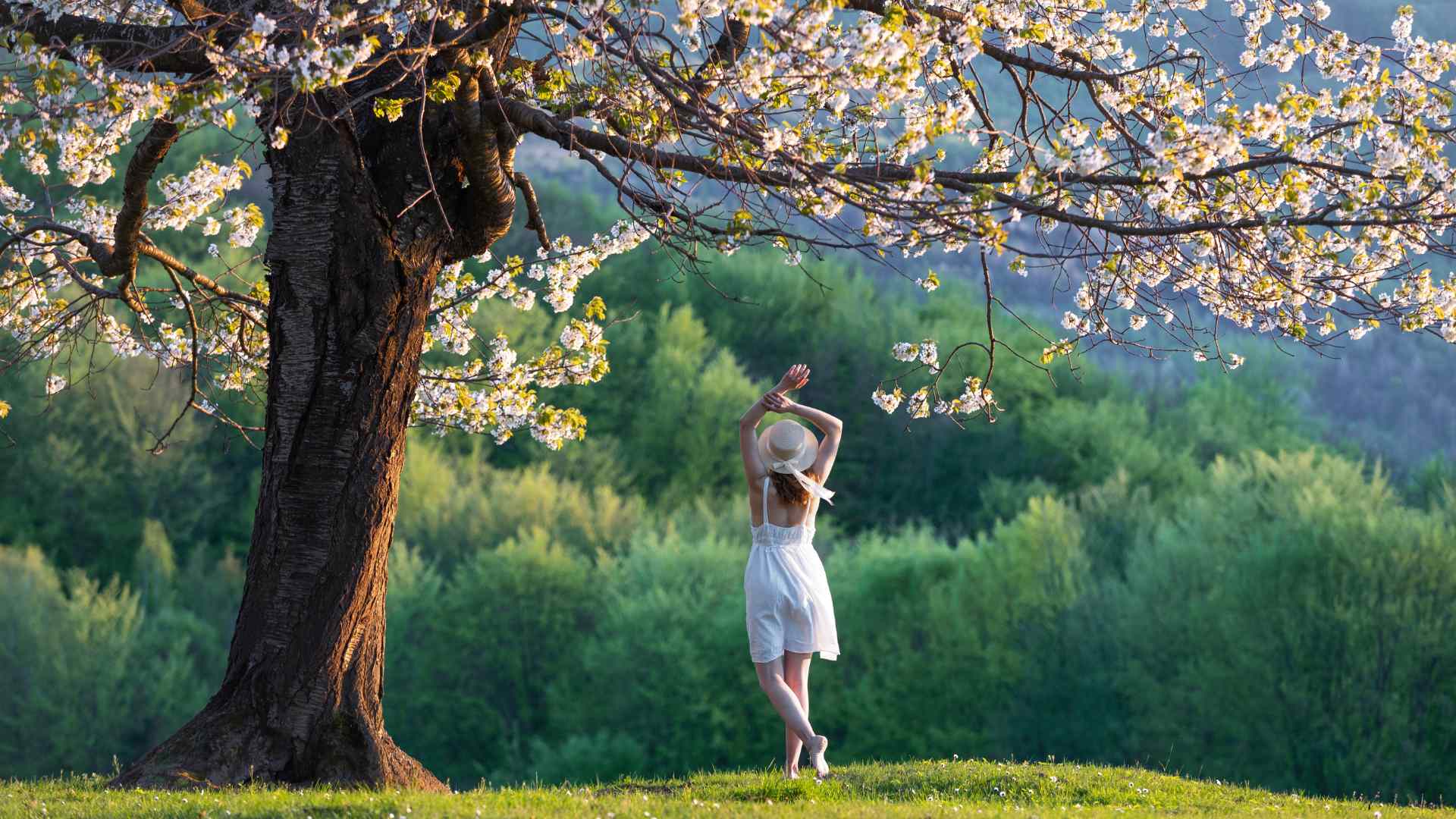
You do not need a national park for any of this to work. A backyard, a scrubby patch of grass, or a city park all count, as long as your child is outside and moving.
If you want a stretch goal beyond the backyard, our list of things to do outside is a good place to start browsing.
What matters more than acreage is how often your child actually gets there. A five minute patch of grass visited daily beats a big trip taken once a season.
This is good news for families without easy access to trails or nature centers. Consistency beats scenery, every time, when it comes to actually seeing benefits.
How Much Green Time Is Enough
The World Health Organization recommends at least 180 minutes of daily physical activity for kids under 5, most of it active play, ideally outside. For school age kids, the CDC’s 60 minute benchmark is the floor, not the ceiling.
You do not have to hit 1,000 hours a year to see benefits. Even modest, consistent outdoor time moves the needle on mood and attention.
These numbers are guidelines, not pass or fail tests. A family that manages 45 minutes most days is still doing meaningfully better than a family managing none.
A Realistic Weekly Rhythm for Busy Families
Most families do better with a loose rhythm than a strict quota. Think a walk after school, one longer outing on the weekend, and outdoor play worked into normal errands when you can.
If mornings or afternoons already feel chaotic, our screen free parenting guide has practical starting points that do not require an overhaul.
Weekends are a natural place to go bigger, with a hike, a park trip, or just an extended stretch of yard time. Weekdays can stay small and repeatable, which matters more for building the habit than any single big outing.
Attaching outdoor time to something you already do daily helps it stick. Parking farther from school, walking the dog together, or eating dinner in the yard when weather allows all count.
What This Looks Like by Age
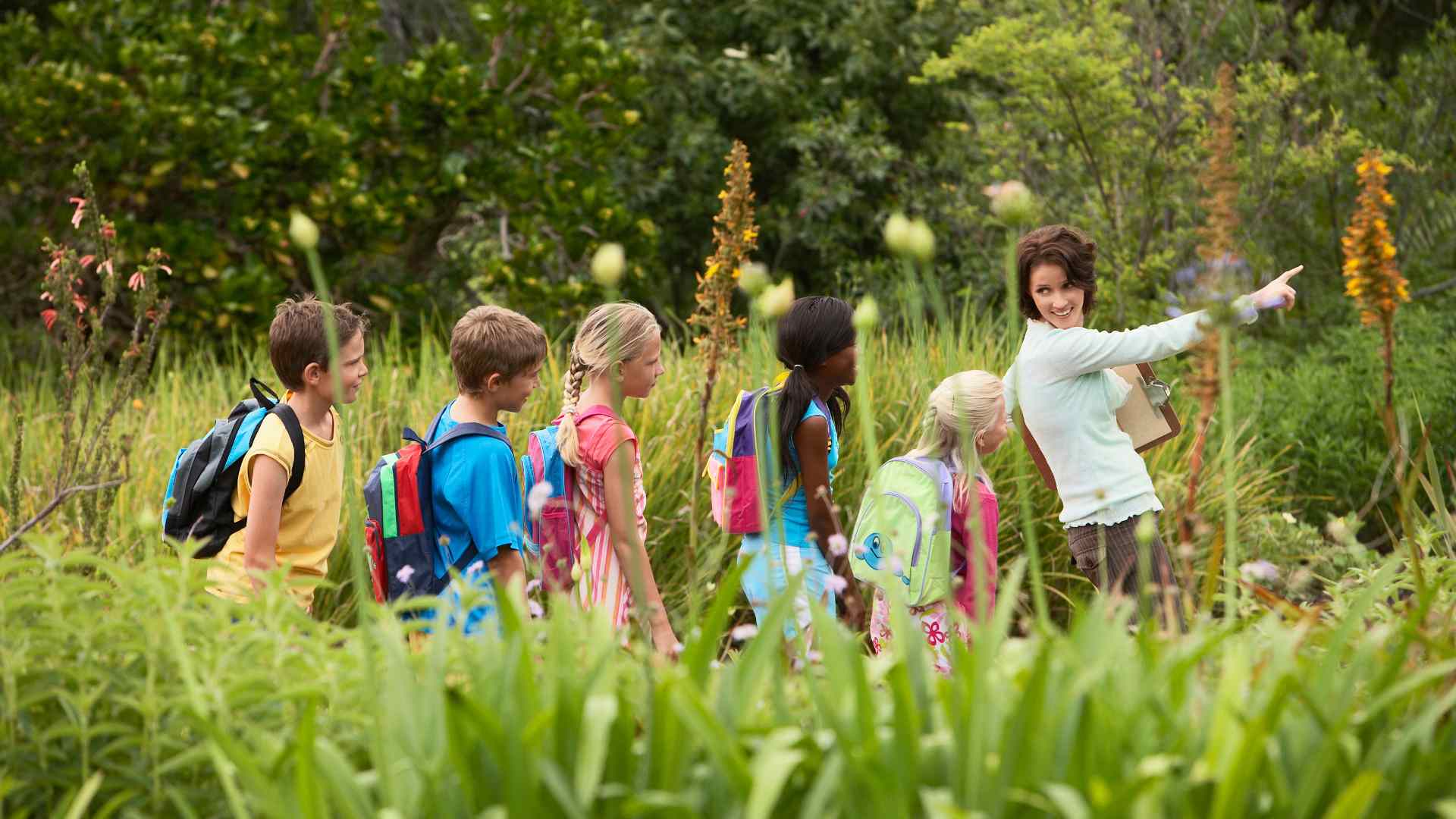
Toddlers need short bursts of unstructured outdoor play, several times a day, more than one long outing. Preschoolers can handle a full hour outside if it involves real exploring, digging, and climbing.
Elementary age kids benefit most from unsupervised or lightly supervised outdoor time with other kids. For age specific screen time context alongside this, our AAP screen time guidelines by age breaks it down further.
Preteens and teens still need outdoor time, even though it often looks like sports practice or biking with friends instead of open ended play. The goal at every age is the same: real movement, real air, away from a screen.
Do not be discouraged if a teenager rolls their eyes at a “family walk.” Even a reluctant fifteen minutes outside still counts toward the same benefits.
When the Weather (or the Whining) Fights Back
Rain, cold, and flat out refusal are all real obstacles, not signs you are doing this wrong. Dressing for the weather solves more of it than people expect, and a short outdoor stretch still counts.
For the days a screen time transition turns into a full meltdown, our screen time meltdown tips can help you get out the door without a fight.
A ten minute walk in the rain, in good boots, still counts. It is often enough to reset a rough afternoon, even when nobody wanted to leave the house.
Small Swaps That Add Up
You do not need a grand outdoor overhaul to see a difference. Trading one show for one walk, a few times a week, is enough to start shifting the balance.
Boredom is part of the process too, and it is not something to rescue your kid from immediately. Our piece on the benefits of boredom explains why that discomfort is doing real work.
Try swapping the first show of the day for ten minutes outside before it starts. That one small change can shift the whole tone of a morning.
None of these swaps need to be dramatic to matter. Small, repeated choices are exactly what move a family’s yearly total, not one heroic weekend outing.
Frequently Asked Questions
Do we really need 1,000 hours outside a year? No, that number is a memorable target, not a medical requirement, and any consistent increase in outdoor time helps.
What counts as green time? Any unstructured play outdoors counts, including a backyard, sidewalk, or local park, not just hiking trails or campgrounds.
Is screen time actually bad for kids? Not inherently, but pediatric guidance points toward limiting screen time and prioritizing active, hands on play, especially for kids under 2.
How much outdoor time should young kids get daily? The World Health Organization recommends at least 180 minutes of daily physical activity for kids under 5, most of it active.
What if my kid refuses to go outside? Start small, keep outings short and low pressure, and let boredom do some of the persuading over time.