
Fall leaves are basically free activity cards scattered all over the ground. I would use them for observation, sorting, games, art, and simple tree identification without turning a walk into a botany exam or asking kids to memorize twenty species in one afternoon.
Start With Safe Collecting
Use fallen leaves from places where collecting is allowed, and avoid unknown plants that may irritate skin. Adults should also watch for poison ivy, thorns, mushrooms, animal waste, traffic, and private property while kids explore.
I like collecting only a handful of leaves at first. Ten useful leaves beat an entire grocery bag that becomes crunchy clutter in the car.
1. Sort Leaves by Color
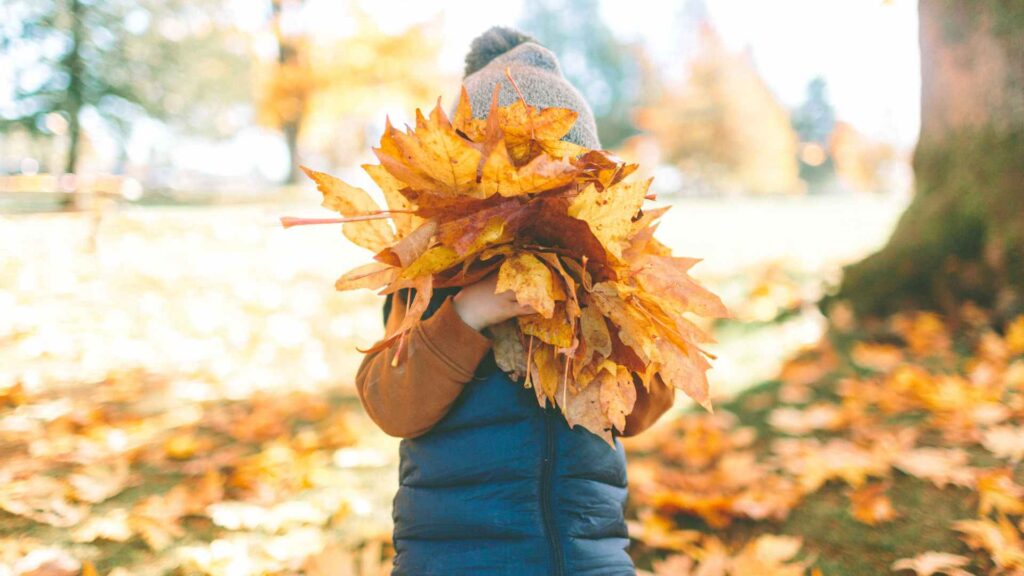
Make piles for green, yellow, orange, red, brown, and mixed colors. Younger kids can use broad categories while older kids look for subtle differences such as rust, gold, or burgundy.
Ask which color appears most often on your walk without assuming the answer will be the same every week.
2. Sort by Shape
Group leaves that are long, round, heart-shaped, lobed, pointed, or compound. Kids do not need the formal botanical vocabulary before they can notice structural differences.
Once the groups are visible, add the real terms gradually.
3. Sort by Size
Line up leaves from smallest to largest or create small, medium, and large groups. Use a ruler if older kids want to measure rather than estimate.
4. Leaf Matching
Collect pairs from the same tree or very similar leaves and mix them on a table. Kids match partners by shape, veins, color, and edge.
This works like a nature memory game without requiring perfect species identification.
5. Tree-to-Leaf Match
Keep one leaf from a tree you can still see and ask kids to find the tree it came from based on remaining leaves, bark, shape, and location. Do this only in a small familiar area where the answer is realistic.
Older kids can use a printed field guide after making their first guess.
6. Leaf Rubbing Lab
Put a leaf under paper with the vein side facing up and rub the side of a crayon across it. Compare how different vein patterns appear.
The rubbing gives kids something to examine later after the original leaf dries.
7. Vein Detective
Use a magnifying glass to trace the main vein and smaller branching veins. Ask kids whether the pattern looks like a tree, road map, ladder, or something else.
Older kids can sketch the vein pattern in a notebook.
8. Leaf Edge Hunt
Compare smooth, toothed, wavy, and lobed edges using a few obvious examples. Use child-friendly descriptions first, then add terminology from a reliable field guide.
9. Guess the Tree From the Leaf
Once kids know several local trees, place a few known leaves on a table and guess which tree each belongs to. Confirm with a printed tree guide or another trustworthy reference.
I would keep the set local; recognizing three neighborhood trees is more useful than memorizing distant species.

10. Leaf Bingo
Make a 3-by-3 grid with clues such as red leaf, leaf longer than your hand, three-point leaf, smooth edge, tiny leaf, leaf with spots, compound leaf, brown leaf, and leaf still on a tree.
Pointing can count so kids do not need to collect everything.
11. Leaf Scavenger Hunt
Look for one leaf with insect damage, one with a long stem, one with five lobes, one larger than your shoe, and one still partly green. Adjust clues to your area.
12. Leaf Memory Tray
Display six distinct leaves for thirty seconds, cover them, remove one, and ask which disappeared. Increase the number for older kids.
13. Leaf Pattern Art
Arrange leaves into repeating color or shape patterns on the ground or paper. Photographing is optional; kids can simply dismantle and build another.
If gluing, make sure collected leaves are allowed and clean enough to bring indoors.
14. Leaf Symmetry Check
Fold leaves gently along the central vein and compare the two sides. They may look roughly symmetrical without being perfectly identical.
This is a useful reminder that nature does not need to match a worksheet exactly.

15. Press a Small Collection
Place dry flat leaves between absorbent paper inside a heavy book, protecting book pages as needed. Let them dry before using them in a notebook or display.
Do not press wet or moldy leaves.
16. Make a Local Leaf Book
Use one page per tree with a rubbing or pressed leaf, tree name after verification, location found, date, and one detail about bark or shape. A small book can grow across several fall seasons.
17. Bark and Leaf Pairing
Without removing bark, compare the texture and pattern of trunks with the leaves above them. Kids can draw both instead of collecting bark.
18. Same Tree, Different Week
Visit the same tree weekly and compare color, number of leaves remaining, and ground cover. A simple paper chart turns seasonal change into something visible.
19. Leaf Length Challenge
Measure several leaves and predict which will be longest before using a ruler. Older kids can record measurements and find the range.
20. Leaf Story Characters
Choose several leaves with different shapes and turn them into characters on paper with drawn faces, clothes, or settings. Keep permanent markers and glue appropriate to the child’s age and work surface.
Use a Printed Field Guide
A regional tree guide is far more useful than trying to identify every leaf from memory. Focus on features the child can actually see: leaf arrangement, lobes, compound versus simple form, edge, veins, bark, seeds, and tree shape.
Do not identify a plant confidently when you are unsure, especially if anyone may touch or ingest part of it.
Teach Kids Not to Taste Leaves
Leaf identification is visual and tactile only unless an adult with reliable knowledge is handling a specific edible-plant activity. Many plants are not safe to eat, and contamination from pesticides, animals, or roads adds another concern.
Activities by Age
Preschoolers: Color sorting, size sorting, rubbings, matching, bingo, simple scavenger hunts, and leaf art.
Elementary kids: Shape groups, edge comparisons, tree matching, field guides, measurement, notebooks, and repeated tree observation.
Tweens and teens: Local species identification, detailed nature journals, measurement, bark-and-leaf comparisons, seasonal data, and helping younger siblings with games.
Frequently Asked Questions
How do I teach kids to identify leaves? Start with color, shape, size, veins, edges, and a few local trees, then confirm guesses with a reliable regional field guide.
Should kids collect leaves from parks? Rules vary, so follow local regulations and use pointing, drawing, or photographing when collecting is not allowed.
What is the easiest leaf activity for preschoolers? Color sorting, leaf matching, rubbings, and a simple three-item scavenger hunt are easy places to start.
How do I preserve leaves? Dry flat leaves can be pressed between absorbent paper under weight, then used in a scrapbook or nature notebook once fully dry.
The Bottom Line
Leaf identification does not need to start with Latin names or a giant species list. Teach kids to look closely first, then attach names to the patterns they already noticed.
Pick three local trees this fall and learn them well. That tiny field guide in a child’s head is a much better beginning than memorizing fifty leaves once.