
Homeschooling gives you something a school day rarely can: hours of open, unscheduled time.
Here are the screen-free activities that turn those hours into real, hands-on learning your kids will actually ask for again.
Why Homeschooling Is Screen-Free Learning’s Best Friend
In a traditional classroom, curiosity gets thirty minutes before the bell rings.
At home, if your kid wants to spend two hours building a bridge out of popsicle sticks, you can just let them.
That flexibility is exactly what makes screen-free learning easier here than almost anywhere else.
You are not fighting a packed schedule, you are choosing how the day gets filled.
Screens are not the enemy, and nobody here is asking you to swear off all technology forever.
But too much passive screen time can crowd out the hands-on exploration that actually builds skills, according to the National Institutes of Health.
If you are still working out where your family lands on screens in general, a gentle beginner’s approach to screen free parenting is a good place to start.
None of this has to be all or nothing, even on a homeschool schedule.

Nature Journaling and Backyard Science Missions
Give your kid a cheap notebook, a pencil, and a “job title” like Backyard Scientist, and watch what happens.
Nature journaling turns an ordinary walk into a real observation exercise, no matter their age.
Have them sketch three plants, track cloud shapes for a week, or count how many species of birds visit your yard.
The National Wildlife Federation has found that regular time in nature supports attention, creativity, and emotional regulation in kids.
For younger homeschoolers, turn it into a scavenger hunt instead of a journal.
Older kids can go deeper with a proper bug hunting expedition, complete with a magnifying glass and a field guide.
Keep the notebook in the car or by the back door so it becomes a grab and go habit.
Some of the best entries happen on the most ordinary afternoons.
Hands-On Math That Doesn’t Feel Like Math
Math sticks better when it is attached to something you can hold.
Baking is the easiest entry point, since fractions become real the moment you are halving a recipe.
Try measuring the yard in footsteps, then converting that into feet using a tape measure.
For older kids, budgeting a fake “family grocery trip” with a forty dollar limit teaches subtraction and estimation at the same time.
Dice games, playing cards, and dominoes are quietly some of the best math tools you already own.
A simple game of War builds number sense in kids as young as four, no worksheet required.
For kids around eight and up, a weekly “store” where they earn and spend play money adds budgeting to the mix.
It teaches percentages and change making far better than a page of problems.
Reading and Storytelling Adventures
Reading aloud together works at almost any age, even once your kid can read alone.
It builds vocabulary, listening stamina, and a shared world you can talk about later.
Let your kid narrate a story back to you in their own words after you finish a chapter.
This single habit, called narration, is a cornerstone of several classical homeschooling methods.
If reading time has become a battle, our guide on encouraging a love of reading has specific, low-pressure ways to rebuild the habit.
Acting out a favorite scene from a book is also a sneaky way to practice reading comprehension.
For kids who love a challenge, invite them to write an alternate ending to a favorite story.
It stretches both creativity and comprehension at once.
Kitchen Chemistry and Everyday Science
Your kitchen is already a fully stocked chemistry lab, you just have not labeled it that way yet.
Baking soda and vinegar, yeast and sugar, oil and water each teach a real chemical concept.
Have your kid predict what will happen before you start, then compare it to what actually happens.
That single step, prediction before observation, is the actual scientific method in miniature.
Our science experiments you can do at home roundup has a full list to keep this going for weeks.
Most of them use ingredients you already have in the pantry.
Growing mold on bread in a sealed bag, safely observed from outside the bag, is a favorite for a reason.
It is gross enough to hold attention and educational enough to justify the smell.
Building, Engineering, and Tinkering Challenges
Give your kid a pile of cardboard, tape, and a challenge: build something that can hold a book off the ground.
This is engineering, full stop, and it teaches structural thinking faster than any textbook chapter.
Toothpick and marshmallow towers teach the same lesson about triangles and weight distribution.
Set a timer for twenty minutes and see how tall they can build before it falls.
For a longer project, a weeklong bridge or catapult build gives kids a chance to fail, adjust, and try again.
That trial and error loop is where most real learning actually happens.
If Lego bricks are already scattered across your floor, turn that clutter into structured engineering practice with a specific build challenge.
Challenge cards work well here, like “build something that rolls” or “build something taller than you.”
Art and Creative Expression as Curriculum
Art is not a break from learning, it is learning, just measured differently.
Drawing from observation builds focus and fine motor skills that carry over into handwriting.
Try a “study” of one object, a leaf, a shoe, a cup, drawn five different ways.
It teaches patience and close looking in a way that feels nothing like a lecture.
Clay, watercolor, and collage each ask for a different kind of problem solving.
Rotate through them weekly so no single medium gets stale.
Let older kids illustrate a scene from whatever they are reading in history or literature that week.
It ties two subjects together without either one feeling forced.

History That Kids Can Touch
History clicks when it stops being a timeline and starts being an object.
A simple family tree project, sketched by hand, turns your own family into a first history lesson.
Cooking a dish from a specific time period or region adds a sensory layer that textbooks cannot.
Building a model of a historical structure out of sugar cubes or clay works the same magic.
Letting your kid write a “letter” as a historical figure, in first person, builds empathy along with recall.
It also happens to be excellent writing practice.
A simple homemade timeline, taped along a hallway wall, gives kids a visual they will walk past all week.
Adding a new event each time you study something keeps it growing instead of static.
Music, Rhythm, and Sound Exploration
You do not need an instrument budget to bring music into your homeschool day.
Pots, pans, and wooden spoons make a genuinely good starter percussion set.
Clapping games teach rhythm and pattern recognition, both of which quietly support early math skills.
Making instruments from rubber bands and boxes adds a physics lesson about vibration and pitch.
If your child gravitates toward a specific song or genre, let them build a short “concert” for the family.
Performing for an audience, even a small one, builds real confidence.
Older kids can research the history behind a favorite genre and share three facts at dinner.
It quietly folds research and public speaking into something they already enjoy.
Outdoor Skills and Nature Study
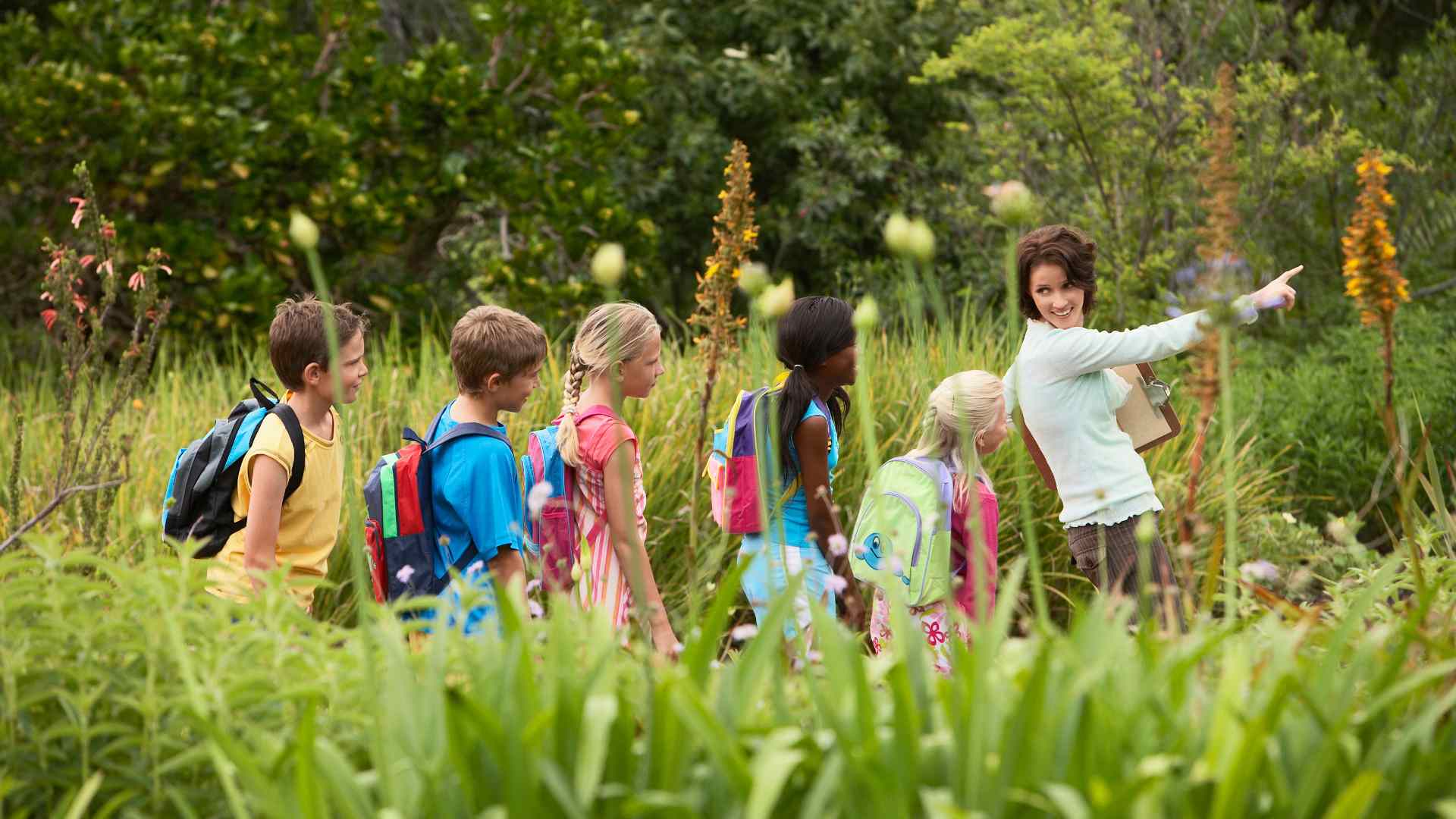
Outdoor time is not just a break, it is where a huge amount of real learning happens.
The CDC recommends kids get at least sixty minutes of physical activity a day, and outdoor learning easily covers that.
Teach basic knot tying, how to read a simple compass, or how to identify three trees in your yard.
Our outdoor educational games collection is a good place to start if you want structure without a screen.
Even something as basic as tracking the weather daily builds observation skills over time.
Our DIY weather station project turns that habit into an actual ongoing experiment.
Rotate these outdoor sessions through the week so they do not become just one more Saturday chore.
Ten focused minutes most days beats one long session that everyone dreads.
Life Skills That Teach Real Subjects
Chores are not a detour from learning, they are often the lesson itself.
Meal planning teaches budgeting and nutrition, laundry teaches sorting and sequencing, and sewing on a button teaches fine motor precision.
Let your kid plan one full family meal, including the grocery list and the estimated cost.
It is math, reading, and executive function practice disguised as dinner.
Gardening is another quiet powerhouse, teaching patience, biology, and responsibility all at once.
Even a single pot of herbs on a windowsill can carry the same lesson.
Basic first aid, like how to clean a scrape or read a thermometer, is a life skill worth practicing on purpose.
Kids as young as six can handle simple versions of these tasks with supervision.
Field Trips and Community Learning
Homeschooling opens up the whole week for field trips that a school schedule cannot fit in.
Weekday mornings are often the quietest time to visit a museum, a farm, or a nature center.
Volunteering counts as learning too, and it teaches empathy alongside real world logistics.
A regular volunteer shift, even once a month, gives kids a sense of contribution that a worksheet cannot replicate.
Local libraries often run free homeschool programs, from science demos to book clubs.
Call ahead, most librarians are thrilled when homeschoolers show up.
Ask a local business owner, farmer, or tradesperson if your kid can shadow them for an hour.
Real jobs, seen up close, teach lessons no curriculum can replicate.
Building a Screen-Free Homeschool Routine That Sticks
None of this requires a rigid schedule, homeschooling works best with a rhythm instead.
Try anchoring screen-free blocks to a specific time, like “after lunch is project time,” rather than negotiating it fresh every day.
A simple visual chart with two or three activity options works better than an open-ended “go find something to do.”
Kids, especially younger ones, do better with a few concrete choices than an empty afternoon.
If your family already has a screen time plan in place, the American Academy of Pediatrics has a free tool for building one that fits your household.
Pairing that plan with a rotating list of offline activities makes the whole thing much easier to stick to.
Expect some pushback in the first week or two, that is normal and it does pass.
Consistency matters far more than any single activity on this list.
Frequently Asked Questions
What age is best to start screen-free homeschool activities? Most of these activities can be adapted for kids as young as three, and the specifics simply get more advanced as they get older.
How do I keep a homeschool day screen-free without a strict schedule? Anchor screen-free blocks to daily routines, like right after breakfast or right after lunch, so it becomes a habit rather than a fresh negotiation.
What if my kid says they are bored during screen-free time? Boredom is often the first step toward real creativity, and offering two or three simple options usually helps them move through it.
Do screen-free learning activities work for different learning styles? Yes, hands-on activities naturally flex between visual, auditory, and kinesthetic learning in a way that a single worksheet cannot.
How much outdoor time should homeschoolers aim for each day? The CDC recommends at least sixty minutes of physical activity daily, and outdoor learning time can count toward that goal.