
Rain against the window means indoor recess, and indoor recess means twenty five kids and one flickering smart board.
Here are screen free options that actually hold their attention, tested by real teachers and real tired parents.
Why Indoor Recess Turns Into Screen Time (and How to Stop It)
When the gym is booked and the hallway is off limits, screens feel like the only fast option. A teacher has thirty seconds to make a decision, and a cartoon buys quiet.
The problem is that quiet does not mean regulated. Kids who do not get to move their bodies at recess often come back to the classroom fidgety, not calm, because the energy never had anywhere to go.
The CDC notes that recess supports memory, attention, and classroom behavior, not just fitness. Movement is not a reward for finishing work, it is part of what makes finishing work possible.
Kids ages six to seventeen need about sixty minutes of moderate to vigorous physical activity most days, and a chunk of that has to come from somewhere during a school day. Indoor recess is not a nice extra, it is one of the only windows some kids get.
Build a Rainy Day Recess Bin Ahead of Time
The single biggest fix is having a bin ready before the first raindrop hits. Fill a bin with jump ropes, bean bags, a soft foam ball, sidewalk chalk for laminated hopscotch mats, and a deck of cards.
Label it “Rainy Day Recess” and keep it somewhere grab and go. When the decision is already made, nobody defaults to the cart of tablets in the corner.
At home, this same bin works for a surprise early dismissal or a sick day on the couch. If you want more ideas for stocking one, our rainy day crafts roundup pairs well with this list.
Ask kids to help pick what goes in it at the start of the year. A bin they helped build gets more buy in than one that just appears on a rainy Tuesday.
Indoor Obstacle Courses Using What You Already Have
Painter’s tape on the floor turns a hallway into a balance beam in under two minutes. Pillows become lava, chairs become tunnels, and a jump rope laid in a zigzag becomes a path kids have to hop along without touching the edges.
Time each kid or group and let them beat their own record on a second round. The goal is not speed, it is giving big muscles something to do in a small space.
Most backyard obstacle course setups adapt indoors with a little rearranging, so keep a mental list of what has worked outside before. A chair to crawl under, a line of books to hop over, and a rope to balance along cover most of what any age group needs.
Music and Movement Breaks That Reset the Room
Freeze dance needs nothing but a phone for the music and floor space. Play thirty seconds of a song, pause it, and everyone has to hold whatever pose they landed in.
Simon Says works the same way and adds a listening component, which is useful on a day when attention is already fraying. Add silly commands like “hop on one foot like a flamingo” to keep it from feeling like a drill.
These short bursts, three to five minutes at most, are enough to shake out wiggles without derailing the rest of the period. The American Academy of Pediatrics points out that kids who move throughout the day, not just during one long block, tend to stay more engaged overall.
A single upbeat song is usually all the setup a room needs. There is no equipment to hand out and nothing to clean up afterward.
A Quiet Corner for Kids Who Need to Come Down, Not Rev Up
Not every kid wants to run laps around a classroom. Some need the opposite: a beanbag chair, a stack of picture books, and permission to sit still for ten minutes.
Set up a small reading nook with a rotating basket of books, a few notebooks, and colored pencils. This is not a punishment corner, it is simply where the quieter kids recharge.
We wrote a full setup guide for building one that works at home too, in our reading nook piece.
A soft rug and a couple of pillows are usually enough to signal that this spot is different from the rest of the room. Kids figure out fast which zone matches what they need that day.
Classic Games That Still Work Indoors
Duck Duck Goose, Heads Up Seven Up, and Musical Chairs have survived for decades because they need almost nothing to run. A circle of desks or a cleared square of carpet is enough space.
Charades works well for slightly older kids and doubles as a vocabulary exercise if you draw prompts from spelling words. Twenty Questions is perfect for a smaller group stuck at a table during a wet lunch period.
None of these require a projector, a login, or a charging cable, which is exactly the point on a day when the wifi is already overloaded. Keep a short list of two or three of these taped inside a supply cabinet so nobody has to think of one from scratch under pressure.
Cooperative Games That Build the Group, Not Just Burn Energy
Not every activity has to be a competition. Balloon volleyball with an invisible net, where the whole class tries to keep one balloon off the ground as long as possible, teaches teamwork without anyone losing.
Human knot, where kids grab random hands in a circle and untangle themselves without letting go, forces communication and patience. These games work especially well right after a stressful morning, when the class needs to reconnect before diving back into lessons.
Improv style games take this even further and are worth trying on a longer indoor stretch. Our improv games for kids post has a list that scales easily from six kids to twenty six.

Simple Science and Sensory Stations
Set up two or three small stations kids rotate through in pairs. A magnet and a tray of mixed objects, a magnifying glass and a few leaves brought in from outside, or a simple sink or float bin with water and small items all work well.
These do not require a lesson plan, just curiosity and something to touch. The National Association for the Education of Young Children points to hands on, exploratory play like this as genuinely supportive of learning, not just a break from it.
Rotate the materials weekly so the bin stays interesting through an entire rainy season.
DIY Card and Board Games Kids Can Make Themselves
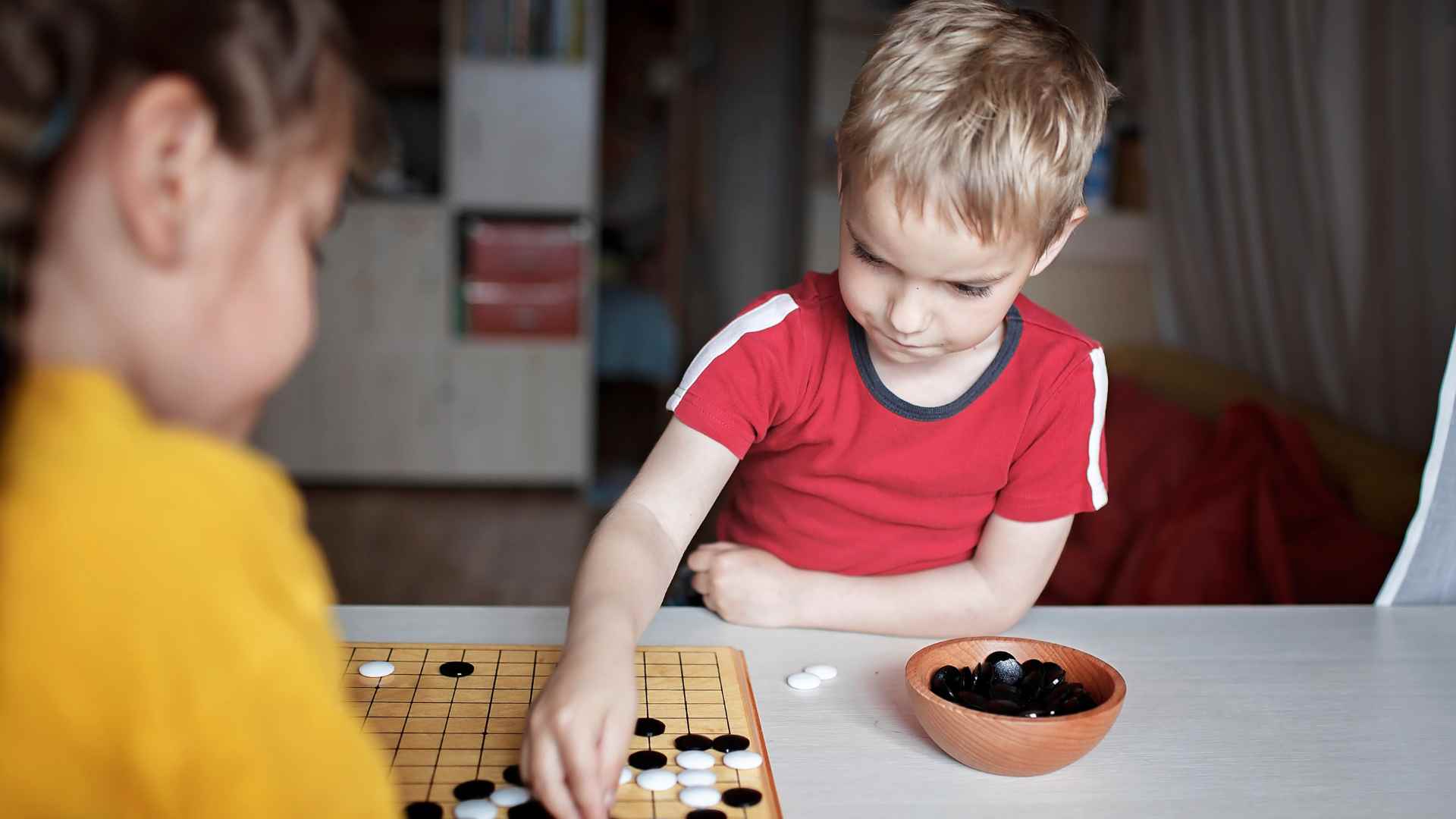
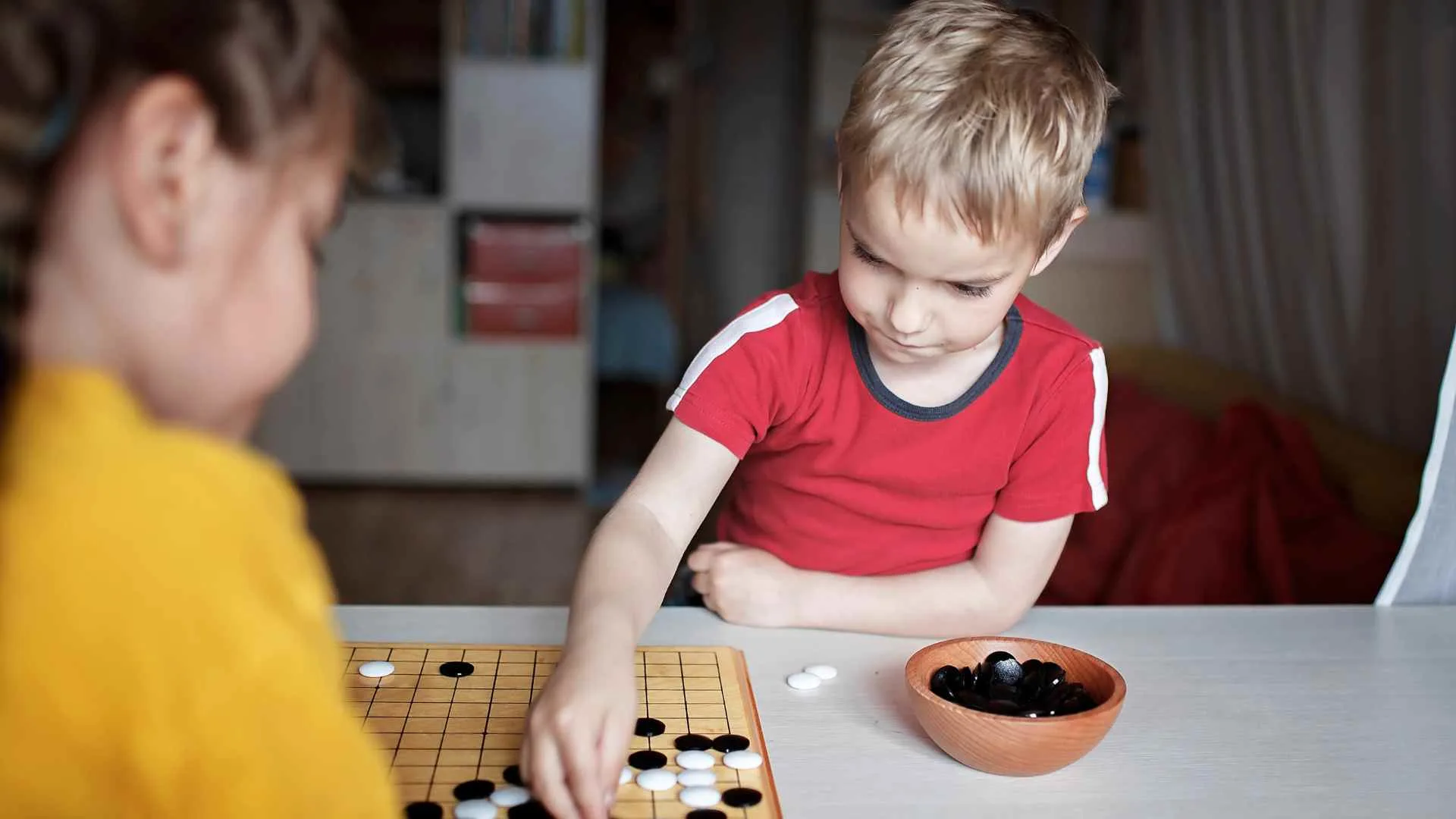
Give a table of kids index cards, markers, and twenty minutes, and they will invent a game. Some end up drawing their own version of Go Fish, others build a full board with dice rules scribbled in the margins.
This works because designing the game is as fun as playing it, and it keeps hands and minds busy at the same time. Save a few of the best homemade games in a folder to pull out on the next rainy day.
For kids who want a real project to build toward, sketch out a board on poster paper one week and add new rules the next. It becomes a running project rather than a single afternoon activity, which is useful when the rain keeps coming back.
Storytelling and Imaginative Play for a Full Class
Round robin storytelling needs no supplies at all. One kid starts a story with a sentence, the next kid adds one, and it travels around the circle until it lands somewhere completely absurd.
For younger kids, a puppet or two brought out from a supply closet can turn a five minute transition into a genuine highlight of the day. Older kids often enjoy writing an alternate ending to a story they already know, working alone or in pairs.
Imaginative play like this supports language and problem solving skills in ways that are easy to underestimate on a hectic day. It also gives kids who are not into fast paced games a way to fully take part.
Tips for Teachers Managing a Full Classroom on a Rainy Day
Rotate through two or three activities in fifteen minute blocks rather than picking one and hoping it lasts the whole period. Attention spans are shorter on cooped up days, and variety keeps the energy from curdling into chaos.
Assign a “captain” for each station who is responsible for supplies going out and coming back. This cuts down on cleanup time and gives a few kids a job that channels their extra energy productively.
Keep instructions short and demonstrate rather than explain at length, since a room full of restless kids will not sit through a long verbal setup. Model the first round yourself so kids can watch instead of parsing a wall of rules.
Build in a two minute warning before recess ends so the transition back to lessons is not jarring. A countdown gives kids time to finish a round instead of stopping mid game and staying frustrated.
Tips for Parents Facing an Unplanned Indoor Day
A surprise rain delay or a canceled outdoor plan does not have to mean handing over a tablet by default. Pull out the recess bin, put on one song, and let the living room absorb a little chaos for ten minutes.
If your child pushes back hard for screens, that reaction is common and it is not a sign you are doing anything wrong. Our screen time meltdown guide has specific scripts for that exact moment.
A little boredom before the games start is actually useful. Our piece on the benefits of boredom explains why kids often invent their best play in that gap.
Frequently Asked Questions
What is a good screen free indoor recess activity for a full classroom? Freeze dance, Heads Up Seven Up, and a rotating obstacle course all work well because they need almost no setup and scale to any group size.
How long should an indoor recess activity last? Plan for ten to fifteen minute blocks and rotate activities so attention stays fresh across the whole period.
What belongs in a rainy day recess bin? Jump ropes, a soft ball, bean bags, painter’s tape, index cards, and a deck of cards cover most classic games without any extra planning.
Are quiet activities as valuable as active ones during indoor recess? Yes, because some kids need a calm reset more than a burst of movement, and offering both options meets more needs at once.
How do I get my kid to choose games over a tablet on a rainy day at home? Keep the alternative visible and ready to go, since a recess bin sitting in view competes with a screen far better than one packed away in a closet.