
Five is loud, curious, and constantly negotiating for more screen time. The good news is five year olds are also primed for some of the best screen free play of any age.
This list is full of activities that actually hold a five year old’s attention, no lecture required.
Why Five Year Olds Thrive Without Screens
At five, something shifts. Kids can follow a few steps in a row, invent their own rules for a game, and stick with something longer than the two minute attention span a toddler had.
That is exactly the age where unstructured, screen free play does the most good. The American Academy of Pediatrics has found that play improves how kids plan, organize, get along with others, and manage their own emotions.
NAEYC, the leading early childhood education group, puts it simply too. Play is essential for children from birth through age eight, and it teaches language, math, and social skills all at once.
None of this means banning screens forever or feeling guilty every time one turns on. It means stacking the deck with offline options your kid actually wants, so the tablet stops being the default and starts being one choice among many.
If boredom shows up along the way, that is not a problem to solve. It is part of how kids learn to entertain themselves, something we go deeper on in our guide to the benefits of boredom for kids.

Backyard and Outdoor Adventures
Five year olds have serious physical energy and outdoor play is the fastest way to burn it off. You do not need a fancy backyard, just some open space and a little permission to get dirty.
- Chalk obstacle course drawn straight on the driveway
- Sidewalk chalk hopscotch with silly bonus squares
- A backyard scavenger hunt for five specific things (a pinecone, a red leaf, a smooth rock)
- Bubble races to see whose bubble travels farthest
- Simple sprinkler or hose play on a warm day
None of these require setup beyond ten minutes and a bag of chalk. That low bar matters on the days you have zero energy left to plan anything elaborate.
Pretend Play and Imagination Games
Five year olds are deep into pretend play, and it is not just cute, it is how they process the world. Giving them props and a loose prompt is usually all it takes.
Try a pretend restaurant where your kid takes your order and “cooks” with play food. A cardboard box becomes a rocket, a pirate ship, or a mail truck with almost no convincing needed.
Puppet shows work well too, even with socks and marker faces as the entire cast. If your kid wants a script, a simple picture book plot is an easy place to borrow from.
Simple Arts and Crafts
Fine motor skills are developing fast at this age, which makes crafting genuinely satisfying instead of frustrating. Keep supplies low mess and within easy reach so your kid can start without asking for help every step.
Paper plate masks, yarn bracelets, and paper collages are all forgiving projects with no wrong answers. For a bigger stash of ideas sorted by mess level and time required, our simple crafts for kids list is worth bookmarking.
Watercolor painting is another good option because cleanup is just water and a paper towel. Let the art be messy and imperfect, the goal is focus and fun, not a gallery piece.
Building and Construction Play
Blocks, cushions, and cardboard boxes give five year olds a chance to plan, build, and problem solve on their own terms. Building also quietly practices math skills like balance, size, and spatial reasoning.
A blanket and couch cushion fort is a classic for a reason, and it can double as a reading nook or a snack hideout for the rest of the afternoon. For a full step by step, check our guide to building an indoor fort.
Magnetic tiles, wooden blocks, or even a tall stack of empty boxes all work. The specific material matters less than giving your kid enough of it to build something real.
Active Games and Movement
Five year olds need to move, and a lot of it. The CDC recommends that kids ages three to five stay active throughout the day, not in one single scheduled block.
Freeze dance, Simon Says, and an easy obstacle course made from pillows all check that box without feeling like exercise. Red light green light is another old favorite that still works every single time.
Jumping games, like counting how many jumps in a row your kid can land, build coordination while feeling like play, not practice. Ten minutes of this kind of movement can reset a cranky afternoon faster than almost anything else.
Sensory and Hands On Play
Some five year olds calm down fastest with their hands busy, not their bodies moving. Sensory play gives that outlet without needing a big production.
Homemade playdough, a bin of dry rice for scooping, or a simple water table all count. A basic playdough recipe of flour, salt, oil, and water holds up well and takes about five minutes to mix.
Kinetic sand and shaving cream on a tray are two more low prep options. Keep a towel nearby and let the mess happen, that is where the calm comes from.

Quiet Time and Focus Activities
Not every screen free moment needs to be high energy. Five year olds also benefit from quiet, focused activities, especially after a big burst of outdoor play.
Puzzles sized for this age (usually 24 to 48 pieces) are a great fit, along with sticker books and simple mazes. Reading together, even for just ten minutes, builds vocabulary and gives everyone a breather.
A basic journal with drawing space works too, even for kids who are not writing full sentences yet. Letting them narrate a picture to you and writing their words down feels like a big deal at this age.
Kitchen Helpers and Cooking Together
Five year olds can genuinely help in the kitchen, not just watch. Simple tasks like stirring, pouring measured ingredients, or spreading butter on toast give them a real job to do.
No bake recipes are the easiest starting point since there is no oven or stove involved. Building a simple sandwich, assembling a fruit skewer, or decorating pre baked cookies all fit that bill.
This kind of cooking also sneaks in math (counting, measuring) and patience (waiting for a step to finish). It is one of the few chores that doubles as quality time.
Nature Exploration Close to Home
You do not need a national park for meaningful nature time, a backyard or nearby park is plenty. Five year olds are naturally curious about bugs, leaves, and dirt, so lean into it instead of steering them away from it.
A simple bug hunt with a magnifying glass can hold attention for a surprisingly long time. Collecting leaves or rocks for a nature table gives the activity a purpose beyond just wandering around.
Time outdoors also supports healthy development in ways that go beyond just burning energy, which is part of why pediatric and child development groups consistently point parents toward more unstructured outdoor time. If bugs are a hit in your house, keep a small jar handy for catch and release sessions before dinner.
Rainy Day Backup Options
Every parent needs a short list of activities that work when the weather ruins the outdoor plan. Keep a small box of “rainy day only” items so they stay novel instead of overused.
Indoor scavenger hunts, a sock puppet show, or an indoor picnic on a blanket in the living room all fit the bill. A dance party to a favorite playlist is another reliable option that costs nothing and burns real energy.
The trick is having two or three of these ready before the rain starts, not scrambling to invent one mid meltdown. A little prep here saves a lot of stress later.
Games the Whole Family Can Play
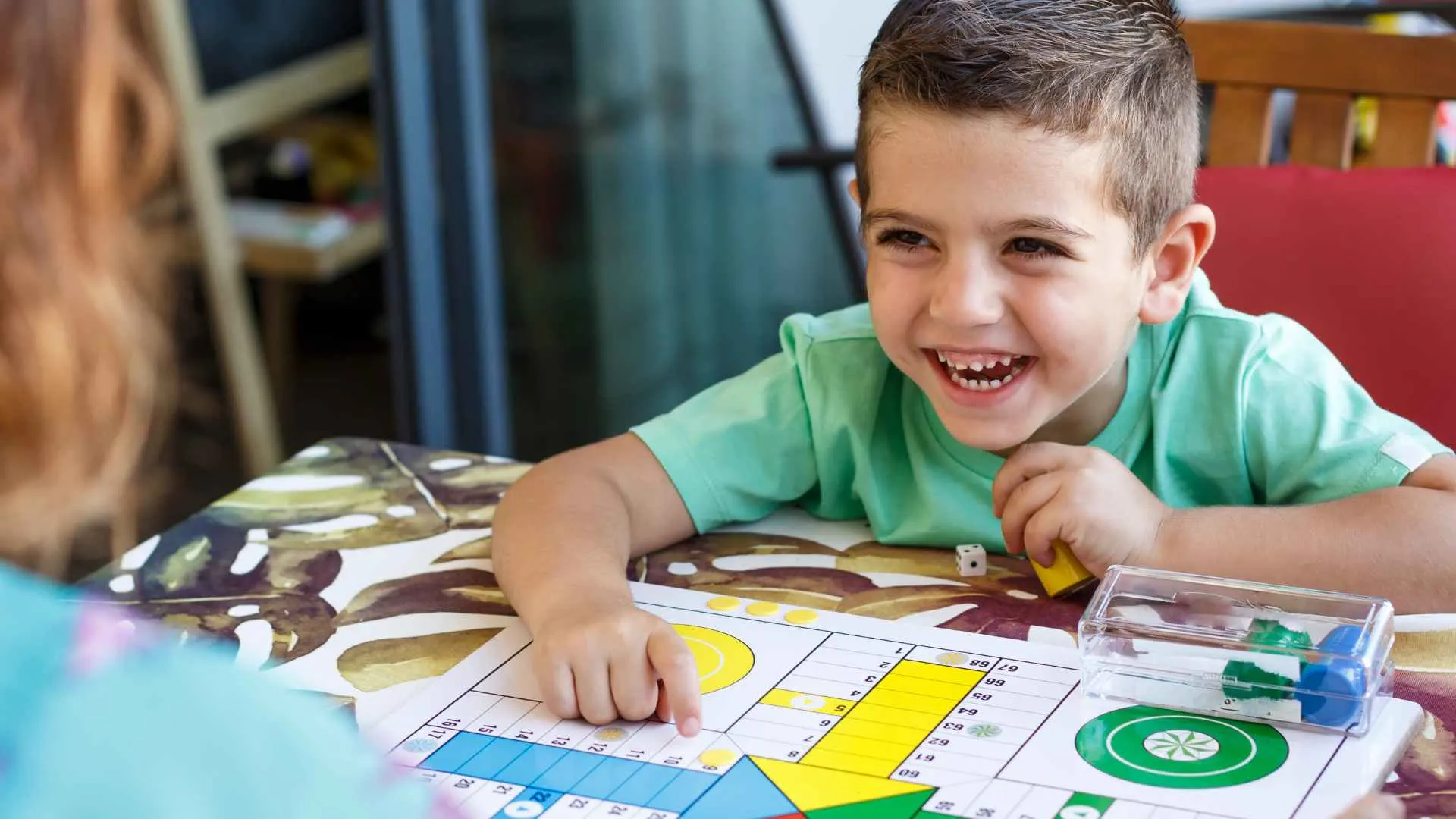
Five is a great age to start building a family game habit, since kids this age can usually follow simple turn taking rules. Short, low pressure games work best, long ones tend to lose them halfway through.
Simple matching games, easy cooperative board games, and card games like Go Fish are all solid starting points. Our full list of board games for 5 year olds has more options sorted by how long each one actually takes to play.
Family game time does double duty here. It replaces screen time and builds the kind of connection that a show on a tablet simply cannot.
Making the Screen Free Switch Easier
Cutting screen time cold turkey usually backfires, and it does not need to be a fight in the first place. Start by picking one or two windows of the day, maybe right after school or before dinner, to fill with offline activities instead.
Keep a short list of go to activities somewhere visible, like taped inside a kitchen cabinet, so you are not inventing ideas on the spot every time. When your kid says they are bored, resist the urge to immediately hand over a screen, our guide on what to do when your kid says they are bored has practical scripts for that exact moment.
Boredom itself is not the enemy here. The Child Mind Institute notes that boredom fosters creativity, self esteem, and original thinking when kids are given the space to sit with it instead of being rescued from it immediately.
Give the transition a few weeks before judging whether it is working. Five year olds adjust faster than we expect, especially once the new routine feels normal instead of like a punishment.

Frequently Asked Questions
How much screen time is okay for a 5 year old? Guidance varies by family and situation, so it is worth reading the full breakdown of expert recommendations by age rather than relying on one blanket number.
What if my 5 year old says they are bored within five minutes of a new activity? That is normal, especially early in a screen free routine, and it usually means they are used to constant stimulation rather than pacing their own play.
Do these activities work for siblings of different ages? Most of them do with small tweaks, and pairing a 5 year old with an older or younger sibling often makes the activity last longer, not shorter.
How long should I expect a 5 year old to stay focused on one activity? Somewhere between ten and twenty five minutes is typical, though a favorite activity can stretch well past that.
Is it bad to repeat the same activities over and over? Not at all, repetition is comforting at this age and often means the activity is genuinely working, so let your kid lead on when they are ready for something new.