
Party games are the difference between kids who remember the day and kids who spent it staring at a tablet in the corner.
The right game for the right age turns chaos into laughter, and you do not need a Pinterest board to pull it off.
Why the Right Game Makes (or Breaks) a Party
A good party game is basically crowd control that feels like fun. Pediatric research on play backs this up, and the American Academy of Pediatrics has called play essential enough that pediatricians should treat it almost like a prescription.
Kids do not need fancy equipment to have a great time. They need a game that matches their age, their energy level, and the number of guests standing around waiting for something to happen.
Party games also fill the awkward gaps between arrival and cake, when kids are still warming up to each other. A five minute icebreaker gives everyone something to do besides hover near the snack table.

Party Games for Toddlers (Ages 2 to 3)
At this age, a “game” mostly means moving their bodies and copying a grown up. Skip anything with real rules or turn taking, since most 2 and 3 year olds are not there yet.
Bubbles are the reigning champion of toddler parties, and freeze dance is a close second. Put on music, let everyone wiggle, then pause the song so they freeze like statues.
A simple parachute game works beautifully too, if you have a lightweight sheet or an actual play parachute. Toss soft balls on top and let the toddlers bounce them while the grown ups shake the edges.
For a party favorite that also fits the theme, check our birthday ideas for 3 year olds for a full lineup that pairs well with these games.
Keep a close adult on hand for every toddler game, since this age group needs more guidance than independence. A five to ten minute activity block is usually the sweet spot before someone wanders off toward the cake table.
Party Games for Preschoolers (Ages 4 to 5)
Four and five year olds are ready for very simple rules, short turns, and a little friendly competition. Musical chairs still works, though you can skip the elimination part if meltdowns are a concern.
Duck Duck Goose remains a classic for a reason. It teaches turn taking and following directions, both of which NAEYC lists among the social skills that structured group play helps children build.
Hot potato, Simon Says, and a beanbag toss round out a solid preschool lineup. Keep each game under five minutes, since attention spans at this age are short and that is completely normal.
Demonstrate the game once before you expect anyone to play it correctly. Preschoolers pick up rules much faster when they can watch a grown up act it out first.
Party Games for Early Elementary (Ages 6 to 7)
Six and seven year olds can handle actual rules, mild competition, and games that last a little longer. Relay races are a hit, especially ones with a silly twist like carrying an egg on a spoon.
Charades works too, as long as you keep the prompts simple and kid friendly. Animals, movies they know, and everyday actions are all safe bets.
A scavenger hunt with picture clues instead of written ones keeps everyone included at this age. Kids are just becoming confident readers, so pictures let everyone play without anyone feeling behind.
This is also a great age to let kids help pick a game ahead of time. Giving the birthday kid some input tends to make the whole party feel more like their day.
Party Games for Ages 8 to 9
By 8 and 9, kids want a real challenge and do not mind losing as much as they used to. Capture the flag, if you have the space, is close to unbeatable at this age.
Team trivia works well indoors, especially if you build questions around the birthday kid’s favorite show or hobby. Two truths and a lie is another good option for a slightly calmer moment between active games.
If you are still nailing down the whole party, our birthday ideas for 8 year olds covers themes and activities that pair naturally with this list.
Kids this age also enjoy games with a bit of strategy built in, like a simple puzzle hunt. Hiding clues around the house or yard keeps everyone moving and thinking at the same time.
Party Games for Tweens (Ages 10 to 12)
Tweens can be a tricky crowd, since some still want to run around and others would rather look cool. A minute to win it style setup solves this nicely, because the challenges are quick, funny, and do not require anyone to be especially athletic.
Mafia or Werewolf, played with simple rules, is a huge hit at this age and needs zero supplies. A talent show, even a goofy five minute one, tends to go over better than you would expect.
Our birthday ideas for 10 year olds guide has more on structuring a party for this age group, including how to balance active and low key moments.
Steer clear of games that single out one kid in front of the group for too long, since tweens are especially sensitive to feeling embarrassed. Team formats spread that spotlight around instead of aiming it at one person.
Party Games for Teens (Ages 13 and Up)
Teenagers often say they are too old for games, and then have the best time once you actually start one. The trick is choosing games with a social or competitive edge rather than anything that reads as babyish.
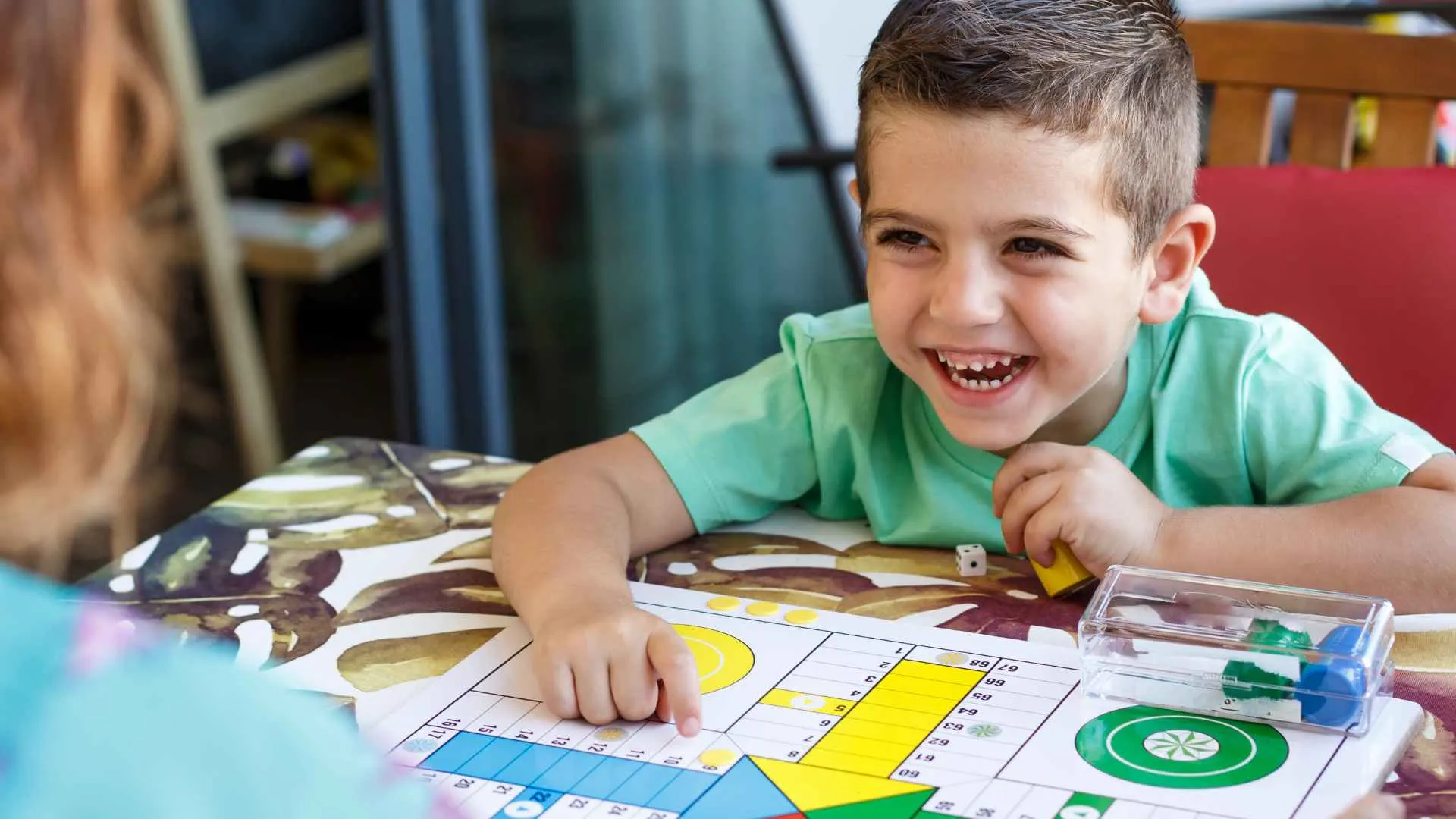
Team based trivia, a card game tournament, or a mystery game where guests solve clues together all work well. If the group leans more chill, a rotation of quieter board games for teens can anchor the night just as effectively.
Letting teens help choose or even run a game tends to work better than assigning one to them. Ownership of the activity makes it far less likely to get an eye roll.

Classic Games That Work at Almost Any Age
Some games barely need adjusting no matter who shows up. Musical chairs, freeze dance, and a well run scavenger hunt all flex easily across a wide age range with small tweaks.
Active games carry a real benefit beyond fun, too. The CDC recommends that school age children get 60 minutes or more of moderate to vigorous activity a day, and a backyard full of running kids covers a good chunk of that.
Always have an indoor backup ready for any game you planned outside. A sudden rain shower should not mean the party grinds to a halt.
Team Games for Bigger Groups
Once you have more than about eight kids, team games keep things organized and give quieter kids a role that does not put them on the spot alone. Relay races, tug of war, and a simple obstacle course all scale well.
Splitting into teams also cuts down on the “everyone is out except me” problem that can sour elimination games. Nobody is left standing alone while the party moves on without them.
Mix up team assignments by more than just friend groups, since siblings and best friends on the same team can sometimes turn competitive fast. A quick draw from a hat keeps things fair and prevents hurt feelings.
Quiet Games for Small Spaces or Rainy Days
Not every party has a backyard, and not every day cooperates with the weather. Twenty Questions, a drawing guessing game like Pictionary, and a simple bingo card with the birthday kid’s favorite things all work in a living room.
These lower key options are also useful as a cooldown between bursts of running games. A five minute breather keeps the whole party from tipping into overtired chaos.
These calmer options also help if you are hosting in an apartment or a rented space with noise rules. Nobody needs to know the party got quiet on purpose for the neighbors’ sake.
How Many Games You Actually Need
You do not need a schedule packed minute by minute. Three or four solid games, spaced out with free play and snack breaks, is plenty for a typical two hour party.
Pick one high energy game, one calmer one, and a backup in case the first pick flops. Having options ready means you are never standing there improvising in front of a room of eight year olds.
Watch the group’s energy and be ready to skip a planned game if it is not landing. A flexible host beats a rigid schedule every time.
Prizes, or Skipping Them Entirely
Prizes are optional, and honestly, most kids are having too much fun to notice if there are not any. If you do want small prizes, cheap stickers, temporary tattoos, or a grab bag of tiny toys work fine and avoid the stress of tracking a winner for every single round.
Some hosts skip individual prizes altogether and send every guest home with the same small goody bag instead. It removes the comparison problem entirely, and nobody leaves feeling like they lost.
If you do keep score, consider awarding silly categories instead of just one big winner, like most creative or best team spirit. It spreads recognition around so more kids leave feeling good about how they did.
Party Game Supplies Worth Keeping on Hand
A small bin of party game basics saves you from a last minute store run every single time. A speaker for music, a bag of balloons, a roll of painter’s tape for hopscotch style games, and a deck of cards covers most scenarios.
If board games are already part of your routine, our family game night post has a list of favorites that double nicely as party entertainment when a group is smaller.
A backup bag of extra items, like a spare speaker battery or a few extra rounds of tape, saves the day when something breaks mid party. It is a small effort that pays off the one time you actually need it.

Frequently Asked Questions
What is the best party game for a mixed age group? Freeze dance or a simple scavenger hunt tends to work across a wide age range with only small adjustments.
How long should each party game last? Most games hold attention best when kept to five or ten minutes before switching to something new.
Do party games need prizes to work? No, most kids stay engaged by the fun of playing and do not require a prize to enjoy a game.
What games work well for a small indoor party? Twenty Questions, Pictionary style drawing games, and a simple bingo card all work well in a smaller indoor space.
How many games should I plan for a two hour party? Three or four games, mixed with free play and snack time, is usually enough for a typical party.