
Your kid can tell you the name of every Paw Patrol pup, but ask them about a real bookshelf and you get a shrug.
Good news: the right book at the right level can pull them off the tablet faster than any lecture ever will.
Why Reading Levels Beat Age Ranges When You’re Picking Books
“Books for 7 year olds” sounds helpful until you hand your kid one and they either yawn or panic.
Reading ability spreads out fast. A first grader might decode like a third grader but still want board book length stories at bedtime.
That gap is normal, not a red flag. Building a love of reading matters more than hitting a grade level target on schedule.
Instead of shopping by age alone, this guide sorts books by what a kid can actually read and enjoy right now.
For even more options once you know the level, Common Sense Media’s age based book lists are a solid next stop.
The same kid might read graphic novels two levels up but need help with a plain text chapter book, and that is completely normal.
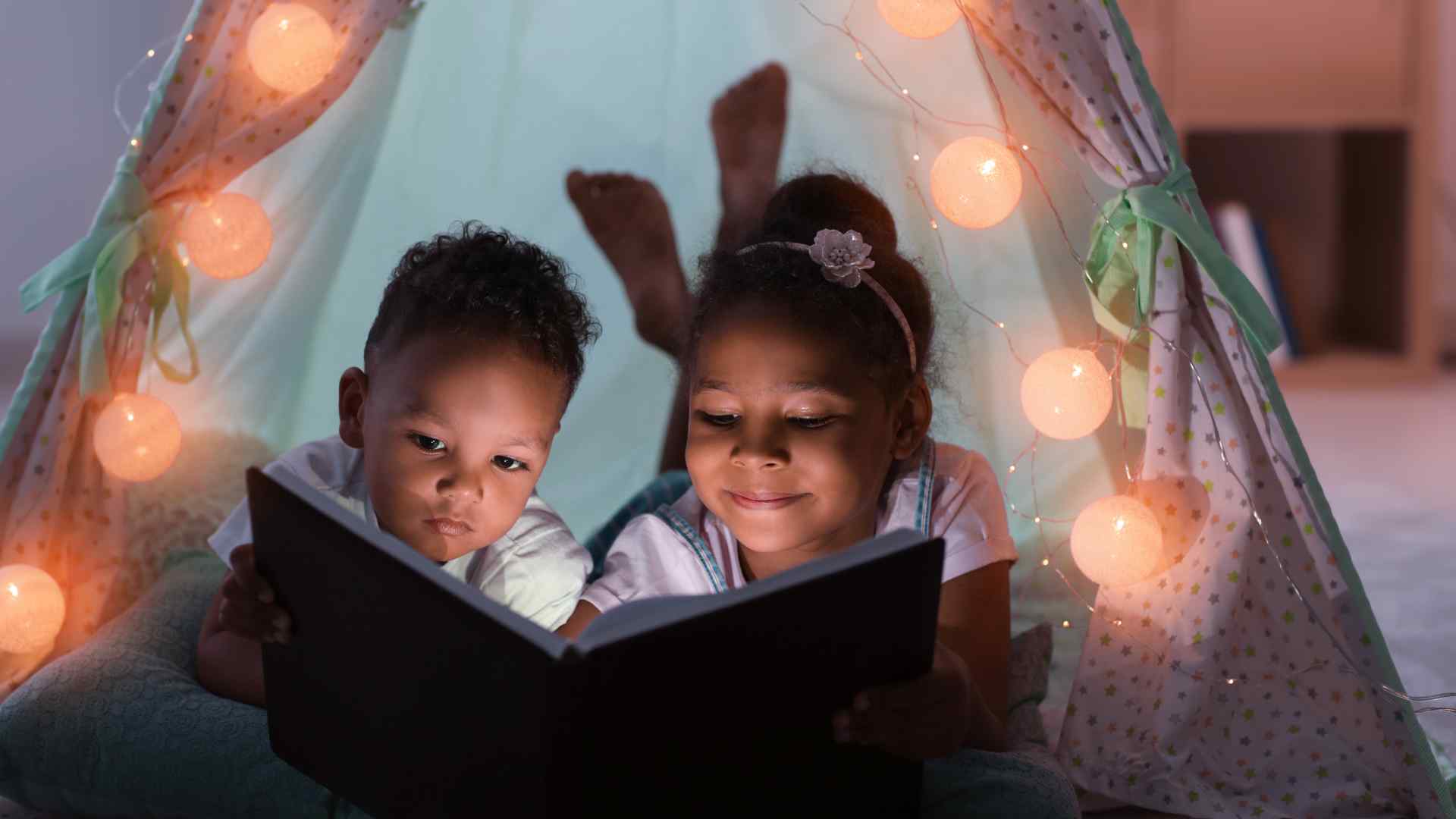
Board Books and Read-Alouds for Babies and Toddlers (Ages 0 to 2)
At this age, nobody is “reading” independently, and that is the whole point.
You are building the habit of sitting still with a book, which pays off for years.
Look for board books with thick pages, one simple image per spread, and a rhythm you can practically sing.
Classics like touch and feel books and simple animal name books work because toddlers want to point, not follow plot.
Ten minutes before nap or bedtime is plenty. A cozy reading nook makes that ten minutes easier to protect every single day.
Early, everyday reading time like this is exactly what early childhood education groups point to as one of the simplest ways to build literacy skills before kindergarten.
Naming pictures out loud together does more for vocabulary growth than passively watching even the gentlest toddler show.
Early Picture Books for Preschoolers (Ages 3 to 4)
Preschoolers can sit for a full story now, especially if there is something funny or gross in it.
Look for picture books with 200 to 800 words, clear illustrations, and a simple story arc: problem, silliness, resolution.
This is prime time for repetition. If your kid wants the same book fourteen nights running, that repetition is literally how new words stick.
Rhyming books and predictable text, where the last word of each page is easy to guess, build phonemic awareness before your kid even knows what phonemes are.
Reading with different voices for each character, even silly ones, keeps preschool attention far longer than a flat monotone.
Emergent Readers for Kindergarten and First Grade (Ages 5 to 6)
This is the stage where kids start sounding out words instead of just listening.
Look for “emergent reader” style books with large text, lots of white space, and short, repetitive sentences.
Decodable books, ones built around specific phonics patterns, are worth seeking out if your kid is still shaky on sounding words out.
Keep a picture book or two in the mix too, since listening comprehension at this age is usually way ahead of decoding skill.
As PBS for Parents notes, talking, listening, reading, and writing together are what actually build these skills, not flashcards or drilling.
Sounding out words is slow and effortful at first, so resist the urge to jump in and finish the sentence for them.
Early Chapter Books for Ages 6 to 8
Early chapter books bridge picture books and “real” novels, usually 1,000 to 10,000 words with a picture every few pages.
Series work well here because the format stays familiar even as the plot changes.
Look for short chapters, big text, and a story that resolves in one sitting or close to it.
If your kid finishes a book and immediately asks for the next one in the series, that is the sweet spot. Protect it.
The pictures in these books are not filler. They help kids track who is talking and what just happened, building confidence to keep going.
Chapter Books for Confident Readers (Ages 7 to 9)
By now, some kids are reading well above grade level while others are still catching up, and both are fine.
Look for books in the 10,000 to 30,000 word range with more complex plots but still fairly short chapters.
Humor sells at this age. Books with jokes, gross out moments, or a kid narrator tend to get finished, not just started.
Series with a strong hook, mystery, mischief, or magic, keep momentum going without you having to nag anyone to pick the book back up.
Mixing in a joke book or trivia collection between novels keeps reading feeling like a treat instead of an assignment.
Middle Grade Books for Ages 9 to 12
Middle grade is where a lot of kids either fall in love with reading for good or quietly drift away from it.
These books run 30,000 to 60,000 words and can handle real stakes: friendship drama, family stuff, adventure, loss.
Let your kid choose their own middle grade books whenever possible. Autonomy over what to read is one of the biggest predictors of whether a kid keeps reading for fun.
If they want to reread a favorite instead of starting something new, let them. Rereading is not a waste of time, it is comfort and fluency practice both.
Talking about what they are reading, without quizzing them, signals that their book choices matter to you.
Books for Reluctant or Struggling Readers, at Any Age
Some kids are not “behind,” they just have not met the right book yet.
Nonfiction is underrated here. A kid who resists novels might tear through a book about sharks, volcanoes, or the world’s grossest animals.
Shorter is not lesser. A 60 page book finished cover to cover beats a 300 page book abandoned at chapter two.
Let interest lead over “grade level” labels printed on the spine. A ten year old obsessed with dinosaurs reading an easier dinosaur encyclopedia is still winning.
Magazines, joke books, and even the backs of cereal boxes count too. Reading is reading, no matter the format.
Graphic Novels That Count as Real Reading
Graphic novels get a bad rap from parents who grew up without them, but the concern does not really hold up.
Kids reading graphic novels are still building vocabulary, inference skills, and narrative sense, just through images and text together instead of text alone.
They are also an easy on ramp for reluctant readers, since the pictures carry some of the load that pure text would otherwise demand.
If your kid only wants graphic novels for a while, that is a phase, not a failure.
Plenty of graphic novels have won major literary awards in recent years, which says something about how seriously the format deserves to be taken.
Audiobooks and Read-Alongs as a Screen-Time Swap
Audiobooks count as reading. Full stop.
They are also one of the easiest screen time swaps for car rides, long chores, or that dreaded after school hour.
Kids can listen to books above their independent reading level, which stretches vocabulary and story comprehension without frustration.
Pair an audiobook with the print copy for kids working on fluency, since following along while listening reinforces both skills at once.
The American Academy of Pediatrics has long recommended thoughtful limits on recreational screen time, and books, audiobooks included, are one of the easiest swaps that does not feel like a punishment.
Most public libraries offer free audiobook apps, so this swap does not have to cost anything extra.
How to Build a Bedtime Reading Habit That Actually Sticks
Consistency beats intensity. Ten quiet minutes every night wins over an ambitious hour that only happens twice a month.
Keep books somewhere more visible than screens. A small stack on the nightstand gets picked up more than one buried in a toy bin.
Let your kid choose, even if the choice feels repetitive or “too easy” to you, since choice is what keeps this from turning into homework.
If bedtime is already a battleground, easing into screen free routines gradually tends to work better than an abrupt switch.
Kids also notice when parents read for fun themselves, so a few minutes of your own book nearby sends a quiet, powerful message.
Building a Home Library Without Spending a Fortune
You do not need a wall of hardcovers to make this work.
Library sales, used bookstores, and library holds can fill a shelf for a few dollars total.
Rotate books in and out every month or two so the shelf feels new without buying anything new at all.
A dedicated reading nook, even a corner with a cushion and a lamp, sends the signal that books live somewhere special in your house.
Trading books with another family is a free way to keep the shelf feeling fresh for everyone involved.
Signs a Book Is Too Hard or Too Easy
The classic rule of thumb: if your kid mispronounces or stumbles on more than about five words per page, the book is likely too hard for independent reading.
That does not mean skip it. Read it together instead, or save it for a few months.
A book is probably too easy if your kid finishes it in one sitting without a single pause and asks for something “harder” unprompted.
Both situations are just useful information, not something to fix in a panic. Making up stories together is a low pressure way to build confidence between levels.
Watch for sighing, fidgeting, or a sudden interest in literally anything else in the room. Those are quiet signals the book is not landing.
Frequently Asked Questions
What reading level should my 8 year old be at? Reading level varies widely at every age, so it is more useful to match books to what your child can read comfortably than to a specific grade number.
Are graphic novels as good as regular chapter books? Yes, graphic novels build real reading skills including vocabulary and comprehension, just through a different format.
Do audiobooks count as reading for screen time replacement purposes? Yes, audiobooks build listening comprehension and vocabulary and make an easy swap for screen time during chores or car rides.
How many books should a kid read at their level versus above it? Most of their reading should feel comfortable and enjoyable, with harder books saved for read aloud time together.
What if my kid only wants to reread the same book? Let them, since rereading builds fluency and comfort and usually passes on its own once they feel secure.