
The first week of school ends and your kid walks in the door like a popped balloon, all forced smiles and no fuel left.
Screens feel like the easy fix, but a real wind-down routine settles them faster and it barely takes any planning.
Why the After-School Hour Feels Like a War Zone
Kids spend all day holding it together for teachers, friends, and a schedule they do not control. By the time they see you, that self-control is gone and something has to give.
That “give” often looks like whining, tears over nothing, or a full meltdown about the wrong colored cup. This kind of after-school unraveling is sometimes called “restraint collapse,” and it tends to show up hardest during the first few weeks of a new school year.
The Child Mind Institute points out that the back-to-school transition brings real stress for kids, even the ones who seem excited about it on the surface. A slower wind-down at home can absorb a lot of that stress before it turns into a fight.
Handing over a tablet in that moment can quiet things down fast, but it also skips the step where your kid actually processes the day. A slower wind-down does more work in the long run.

The 20-Minute Decompression Window
Right after school, most kids need about 20 minutes of low-demand time before they can answer a single question about their day. Save “how was school” for later, it rarely works right at pickup.
Instead, offer a snack, some quiet, and permission to just exist for a bit. No screens, no schedule, just a buffer between school-mode and home-mode.
This is not about entertaining your kid. It is about giving their nervous system a chance to catch up.
Avoid quizzing them about grades, friends, or lunchroom drama in this window, even gently. Those conversations tend to go better once everyone has had a chance to eat and breathe first.
Build a “Landing Pad” Routine at the Door
A landing pad is a simple, repeatable sequence your kid does the second they walk in, before anything else happens. Shoes off, backpack on its hook, snack on the counter, same order every single day.
Predictability is doing the heavy lifting here, not the specific tasks. When kids know exactly what happens next, they need less energy to manage the transition.
You can make the landing pad visual for younger kids with a simple checklist taped near the door. Once the sequence is automatic, it barely feels like a rule anymore, it just feels like what happens after school.
For a five-year-old, the landing pad might be three simple steps. For a ten-year-old, it can include unpacking their own lunchbox or starting a load of laundry.
Quiet Hands, Loud Feelings: Fidget and Sensory Resets
Some kids do not decompress by sitting still, they decompress through their hands. Playdough, kinetic sand, or a bin of dry rice for scooping can absorb restless energy without any screen involved.
These activities work because they are repetitive and require just enough focus to quiet racing thoughts, but not so much that they feel like more work. Simple, mess-contained options tend to get used the most.
Keep a small bin of these sensory tools somewhere your kid can reach without asking. Removing the “ask an adult” step matters more than it sounds like it should.
Get Them Outside Before Homework Starts
Sunlight and movement are two of the fastest ways to reset a dysregulated kid, and both are free. Even 15 minutes in the backyard or on a short walk can take the edge off before homework begins.
The CDC recommends that children ages 6 to 17 get at least 60 minutes of moderate to vigorous physical activity every day, and after-school hours are an easy place to fit some of it in. A quick bike ride, some sidewalk chalk, or a made-up obstacle course all count toward that total.
None of it has to be organized or planned in advance. The goal is movement, not a workout.
Bad weather does not have to cancel this step, either. A few minutes of stretching, jumping jacks, or dancing to music indoors covers the same need for movement.
Kitchen Helper Wind-Down
Cooking together is a wind-down activity in disguise, it is hands-on, low pressure, and gives kids a job that is not schoolwork. Washing vegetables, stirring batter, or arranging a snack plate all count.
The repetitive motions are calming, and working alongside you without needing to perform or answer questions is exactly the kind of low-stakes connection tired kids need. Save the “tell me about your day” questions for while your hands are both busy, they tend to come out more naturally that way.
Even a five-minute task like rinsing berries can be enough. It is the “doing something with you” part that matters, not the recipe.
This works especially well on nights when homework feels heavy. A few minutes of a simple, low-stakes task before sitting down to schoolwork can make the whole evening go smoother.
Reading Nook Reset
A cozy, low-light spot with books and pillows gives kids somewhere to retreat that is not their bed and is not a screen. Even ten minutes curled up with a picture book or comic can lower the temperature on a rough afternoon.
You do not need a full renovation to make this work. A blanket fort in the corner of a room can double as a reading nook without costing anything.
Let your kid choose the book, even if it is one they have read fifty times already. Familiar stories are part of the point right now.
Audiobooks count too, especially for kids who find reading tiring after a full day of it at school. The goal is stillness and story, not necessarily decoding words on a page.

Journal and Talk Prompts for the School Day
Some kids will not talk about school if you ask directly, but they will draw it, write it, or answer a strange hypothetical question instead. Try “what was the silliest thing that happened today” instead of “how was school.”
A simple notebook where kids draw or write one thing from their day works well for kids who are not big talkers. It does not need to be fancy, and it does not need to happen every single day to be useful.
For kids who like writing more than drawing, a short list of open-ended prompts can take the pressure off starting from a blank page. Keep the notebook somewhere visible so it becomes part of the routine, not another chore.
Low-Key Game Night for School Nights
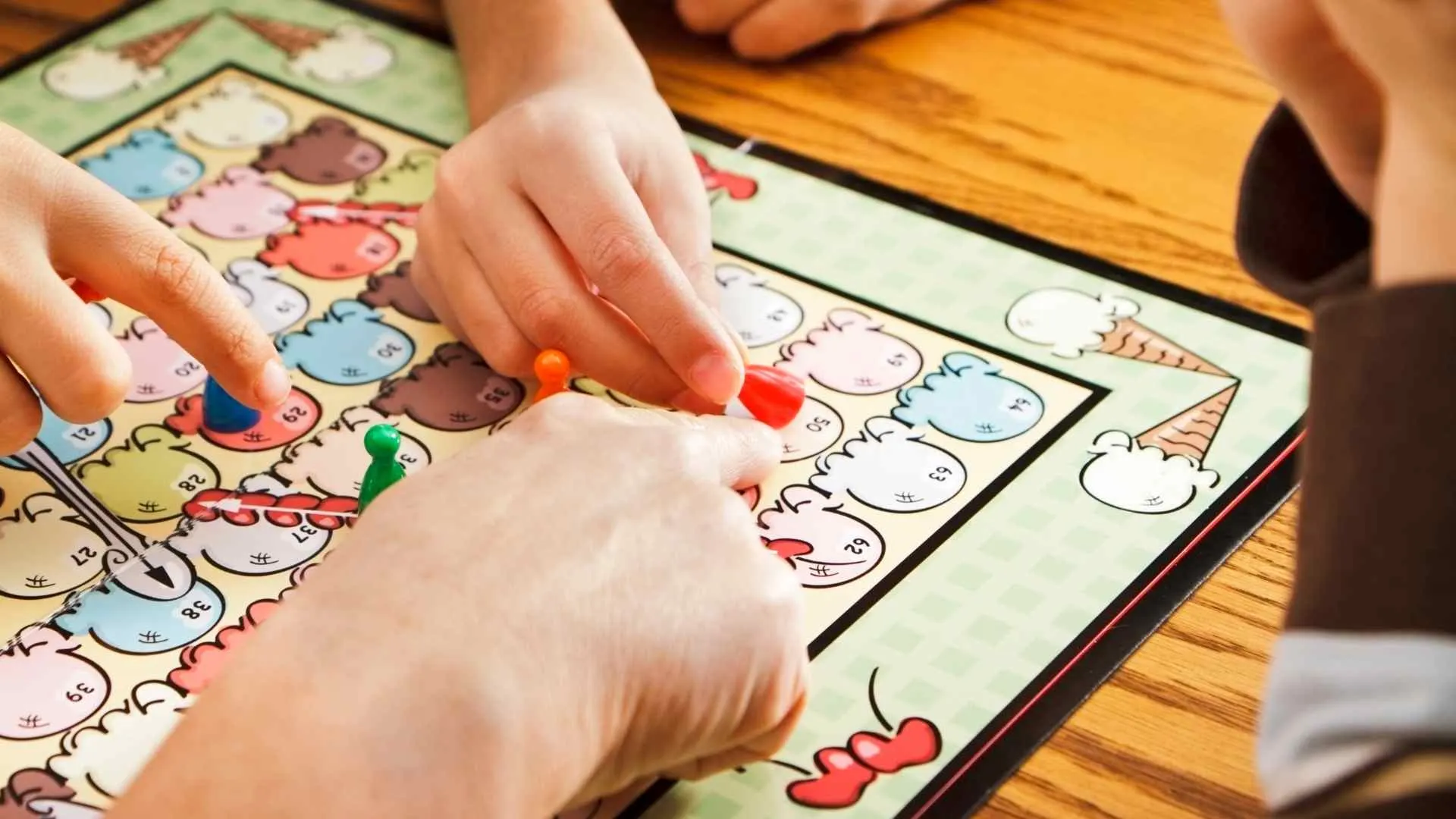
Full family game night does not have to wait for the weekend. A quick round of a card game or a simple board game can be the wind-down activity itself, not a reward after homework is done.
Keep school-night games short, five to ten minutes is plenty. Save the longer sessions from a family game night for Friday, when nobody has to be up early.
Building a Bedtime Routine That Actually Works
Screens should be off at least an hour before bed, and TVs, tablets, and phones are best kept out of kids’ bedrooms overnight. A predictable sequence, bath, book, lights out, works better than winging it night to night.
The AAP notes that school-age kids generally need between 9 and 12 hours of sleep a night, which is more than most families realize once you count backward from a 6:30 a.m. wake-up.
The CDC adds that consistent sleep timing matters almost as much as total hours. Going to bed at wildly different times each night undoes some of the benefit even if the totals add up on paper.
The Screen-Free Weekend Reset
Weekends are a chance to catch up on the wind-down time school nights do not allow for. A full screen-free morning outside, at a park or just in the yard, can reset a kid’s mood for the whole week ahead.
If you want a bigger swing, a dedicated screen-free week during a school break can reset habits that crept back in over a busy semester.
Age-by-Age Wind-Down Ideas
Younger kids, roughly ages 4 to 7, usually need more physical, hands-on wind-downs like sensory bins or a slow walk, since sitting still to talk is hard right after a big day. Keep instructions simple and skip the follow-up questions for a bit.
Older kids and tweens, ages 8 to 12, often want independence more than activity, so a quiet spot to read, draw, or listen to music alone can do more good than a planned activity. Check in with them after they have had that space, not before.
Whatever the age, a rotating list of relaxing activities beats scrambling for ideas at 3:45 on a Tuesday.
When They Melt Down Anyway
Some days the wind-down routine will not be enough, and that is not a sign you did something wrong. A meltdown after a long school day is often just too much feeling with nowhere left for it to go.
Get low, keep your voice steady, and skip the lecture until everyone is calm again. Explaining rules to a kid mid-meltdown rarely lands, no matter how reasonable the rule is.
If screen time meltdowns specifically are a recurring issue at your house, these screen time meltdown tips walk through what actually helps in the moment. Most of it works for after-school meltdowns too, not just the ones tied to turning off a device.
A hard afternoon does not undo a good routine, it is just one data point in a much longer pattern. Tomorrow is a chance to try the wind-down again, not a test you failed today.

Frequently Asked Questions
How long should after-school wind-down time be? Most kids do well with 20 to 30 minutes of low-demand time before diving into homework or chores.
Is it bad to let my kid decompress with a show sometimes? An occasional show is not harmful, but relying on it daily can skip the processing kids need after a long school day.
What if my child refuses to talk about school? Try sideways questions like “what made you laugh today” instead of direct ones, and let drawing or writing stand in for talking.
How much sleep does my school-age kid actually need? The CDC recommends 9 to 12 hours a night for children ages 6 to 12.
What is the single easiest screen-free habit to start with? A consistent landing pad routine at the door tends to have the biggest payoff for the least effort.