
For nearly a decade, “two hours a day” was the automatic answer to every screen time question a parent could ask. That single number is officially gone now.
Here is what the American Academy of Pediatrics actually recommends today, broken down carefully by age, in plain English.
A Quick History of AAP Screen Time Guidance
Back in 1999, the AAP recommended avoiding screen time entirely for children under the age of two, full stop. That original rule reflected an era built almost entirely around television, long before tablets, smartphones, or video calls with relatives existed in any household.
In 2016, the AAP softened that earlier stance into the two-hour-a-day rule that most of today’s parents grew up hearing repeated constantly. It applied one general limit across nearly every screen type available at the time, largely regardless of the specific content or context involved.
By 2026, that older framework had strained badly under the weight of a completely different digital landscape than the one it was originally designed for. Screens now show up routinely in classrooms, restaurants, cars, and even wristwatches, not just in living rooms after dinner.

Why the Old Rule Disappeared
The original two-hour guideline was fundamentally built around research on passive television viewing from decades earlier. Screens today include tablets, smartwatches, school-issued laptops, and voice assistants, which made a single flat number nearly impossible to apply fairly across such different uses.
The updated AAP guidance, released in June 2026, replaces the simple hour count with a broader framework built around quality, context, and ongoing conversation between parent and child.
Dr. Libby Milkovich, one of the co-authors of the update, has publicly noted that a strict hour-based rule had become nearly impossible for real families to actually follow in day-to-day life. The new approach instead asks parents to weigh what a given screen session is realistically replacing, rather than simply counting minutes on a clock.
Under 18 Months
The AAP still recommends avoiding solo screen use at this very young age, aside from video chatting with family members who live far away. Infants consistently learn language and social skills best through real, face-to-face interaction with a caregiver rather than through a screen.
This guidance lines up closely with the World Health Organization’s own guidance, which similarly discourages any screen time for children under the age of one.
Ages 2 to 5
Rather than leaning on a strict hour limit, the current guidance instead focuses on high-quality, genuinely age-appropriate content, watched together with a parent whenever that is realistically possible. Co-viewing turns a passive screen session into a shared, interactive activity instead of functioning as a simple babysitter.
This is a wonderful age to build in regular device-free stretches around meals, naps, and hands-on activities like simple science experiments that keep little hands busy in other ways.
The WHO’s 2019 guidelines specifically suggested no more than one hour of sedentary screen time daily for this exact age group, with less generally considered better for development. The AAP’s newer framework does not really contradict that older figure, it simply stops leading the conversation with a number front and center.
School-Age Kids (6 to 12)
For this age group, the AAP recommends building a written family media plan that protects sleep, physical activity, homework, and genuine in-person time before screens ever get access to the leftover hours in a day. The plan understandably looks quite different in every single household, and that variation is really the entire point of the new approach.
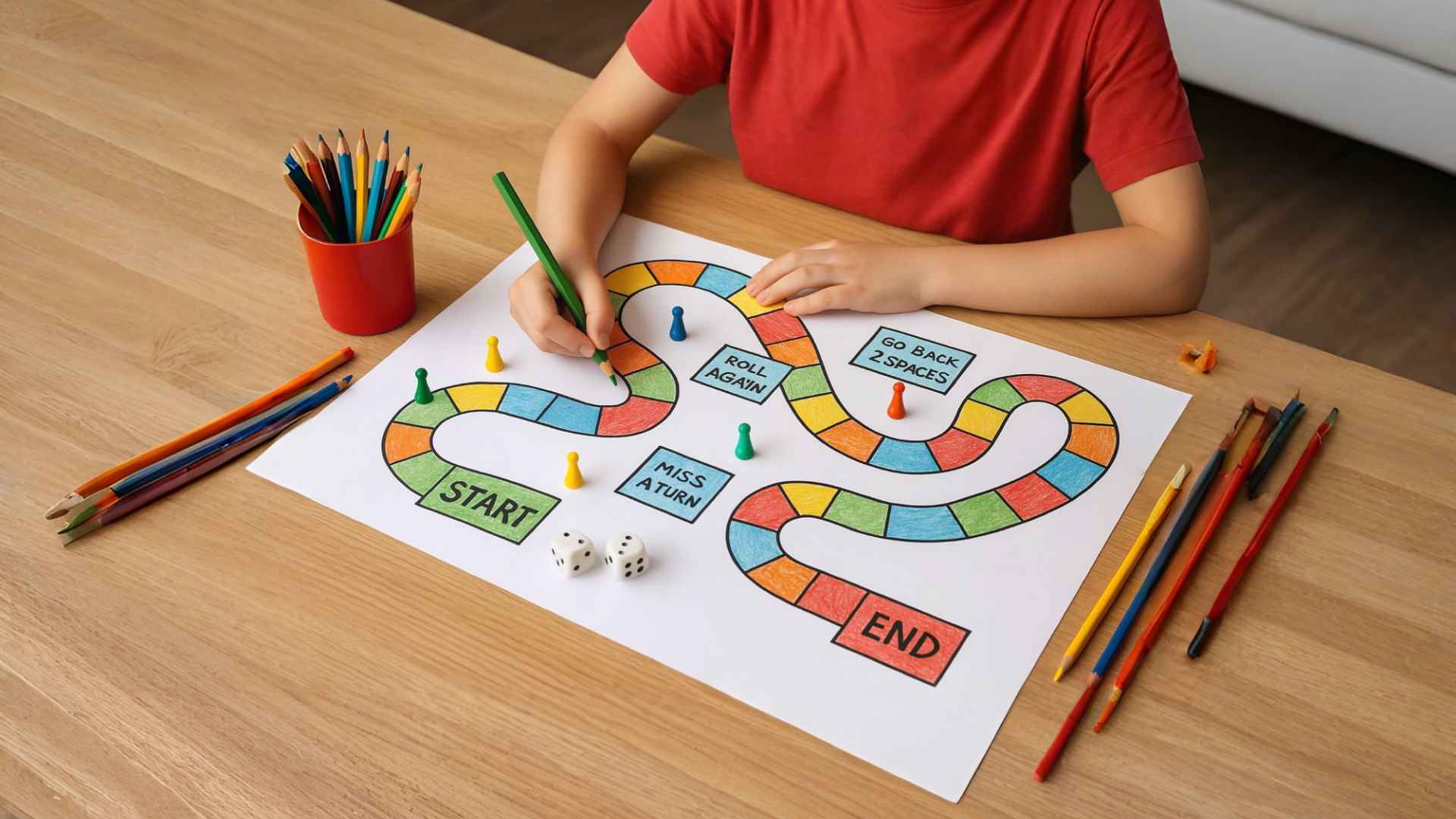
Rotating in outdoor educational games or an age-appropriate board game covers a surprising amount of that leftover time without ever turning into a fight at all.
This is also typically the age where kids first start requesting a device of their very own rather than sharing a family one. A shared family tablet, kept charging in a common space, remains a common and reasonable middle ground before a fully personal device enters the picture.
Teens (13 to 18)
The newest guidance leans heavily into ongoing conversation over strict control at this older age, since teens increasingly manage their own devices with less direct oversight. The AAP specifically flags app design features built deliberately for compulsive use as a bigger genuine concern than raw hours logged on a screen.
Sleep protection remains one specific, concrete focus for this age group in particular. Keeping devices out of the bedroom overnight is one of the few truly concrete recommendations that carried over largely unchanged from the older, stricter guidance.
How This Guidance Compares Internationally
The World Health Organization’s guidelines, published back in 2019, remain more numerically specific than the AAP’s newest approach, particularly for children under five. That international guidance recommends no screen time at all for infants under one, and caps sedentary screen use at roughly one hour daily for children between two and four.
The two organizations broadly agree on the underlying philosophy even where the specifics differ somewhat. Both consistently point toward less passive screen time and more real-world, physical, and social activity as the healthier overall direction for young children.

What the Numbers Actually Show
The 2025 Common Sense Census found that kids age 8 and under average roughly two and a half hours of screen time a day, and that 40 percent already have their own tablet by the time they turn two. The CDC still recommends limiting screen use specifically within early care and education settings for exactly this reason.
Nearly one in four kids already has a personal cellphone by the relatively young age of eight, according to that same detailed report. That particular statistic helps explain why the AAP ultimately shifted its focus toward device design and situational context, rather than continuing to fixate on raw clock time alone.
Common Parent Questions About the New Guidance
Does this mean unlimited screen time is now considered fine? No, it simply means the right limit genuinely depends on your specific child and situation, rather than one universal number applying to everyone equally.
Should I throw out my old two-hour household rule entirely? Not necessarily at all, since a simple time limit can still function as a genuinely useful starting tool, especially for younger children who cannot yet judge time well on their own.
What matters most under this new guidance overall? Content quality, co-viewing whenever realistically possible, and consistently protecting sleep and mealtimes from screen intrusion.
Where can I actually build a real family media plan? The AAP’s own website hosts a free, fully customizable tool built specifically for this exact purpose.
How to Build Your Own Family Media Plan
Start by listing every household member who uses a screen regularly, adults included, since a plan that only covers kids tends to fall apart fast. Next to each name, jot down the devices they actually use most often day to day.
Then work through the four common zones one at a time: mealtimes, bedrooms, mornings, and transitions like car rides. Decide together, as a family where kids are old enough, what each zone allows and does not allow.
Write the finished plan down somewhere visible, like the fridge, rather than keeping it as an unspoken understanding. A plan that only lives in your head is far easier to quietly bend in the moment than one everyone can actually see.
Revisit the whole plan every few months, since a fair rule for a six-year-old rarely still fits the same child at nine. Treat it as a living document rather than a one-time decision carved in stone.
Talking to Your Pediatrician About Screen Time
Well-child visits are a genuinely good moment to raise screen habits directly, especially if a particular behavior or sleep issue has you concerned. Pediatricians see an enormous range of families and can help you judge whether a specific pattern is typical or worth a closer look.
Bring specifics rather than generalities to that conversation, like which apps get used most and around what times of day. A doctor familiar with the current AAP framework can help translate the general guidance into something that fits your particular child.
Putting Guidance Into Practice
A written family media plan reliably beats a vague mental rule that you end up renegotiating fresh every single day. Start with a simple activity list organized by age so that screens finally have some real, tangible competition for attention.
For the bigger picture on actually getting started from scratch, our screen-free parenting guide for beginners walks through every one of the practical first steps in detail.
The Bottom Line
The AAP’s overall shift here is not some kind of permission slip to stop thinking carefully about screen time altogether. It is instead a candid acknowledgment that a single flat number never actually captured what truly mattered in the first place.
Context, content quality, and day-to-day consistency now do the heavy lifting that a simple stopwatch used to handle on its own. Whatever specific numbers your family lands on, revisiting them together every so often matters more than getting the first draft perfect.